Table of Contents
Valle de Cuelgamuros: The History Behind Spain’s Most Controversial Monument
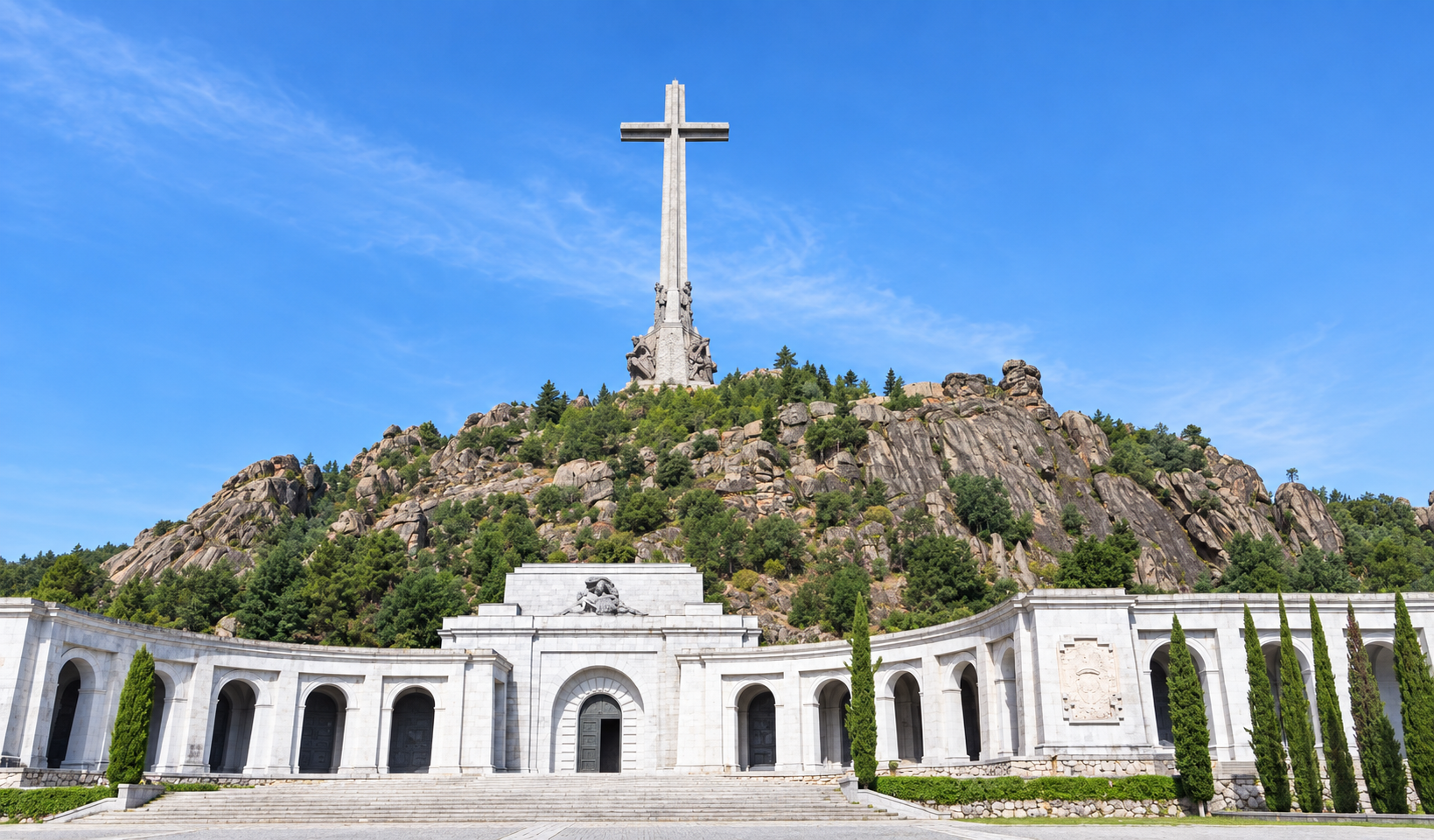
Roughly 50 kilometres northwest of Madrid, carved into the granite slopes of the Sierra de Guadarrama, sits a monument unlike anything else in Spain. Most visitors still know it by its older name, the Valle de los Caídos — the Valley of the Fallen. Officially, since 2022, it’s the Valle de Cuelgamuros, and that name change is itself part of a much longer, still-unfolding story about how Spain has chosen to remember one of the darkest periods of its 20th-century history.
This is a site that resists easy explanation. It’s simultaneously an extraordinary feat of engineering, a working Benedictine monastery, the largest mass grave in Spain, and one of the most politically contested pieces of ground in the entire country. Understanding it properly means understanding all four of those things at once.
Origins: A Monument Born From Victory
The story begins in 1940, barely a year after the end of the Spanish Civil War (1936–1939). The nationalist dictator Francisco Franco personally commissioned the monument, ostensibly to honour “los caídos” — those who had fallen in the conflict. The site’s original, older name was actually Cuelgamuros Valley, a name tied to the geography of the location itself, long before it became associated with Franco’s regime at all.
Construction was formally ordered in April 1940, with building work beginning in earnest in 1941. What followed was a genuinely enormous undertaking: the complex took nearly nineteen years to complete, with construction dragging on until 1958 and the site finally opening to the public on 1 April 1959 — deliberately timed to coincide with the twentieth anniversary of Franco’s victory in the Civil War.
Built by Forced Labour
One of the most difficult, and most essential, facts about the Valley’s construction is who actually built it. The complex relied heavily on the penal labour of political prisoners and prisoners of war — men who had fought against, or were otherwise deemed enemies of, Franco’s regime. Construction under these conditions was gruelling and, by multiple documented accounts, directly responsible for a number of deaths among the labourers involved.
This detail sits at the very heart of why the site remains so contested today. A monument originally framed as a gesture of reconciliation was, in practice, built substantially through the coerced labour of people on the losing side of the war it claimed to memorialise.
What Franco Actually Built
Whatever judgment history has passed on its origins, the physical scale of the Valley is genuinely staggering, and it was designed that way deliberately.
The Cross
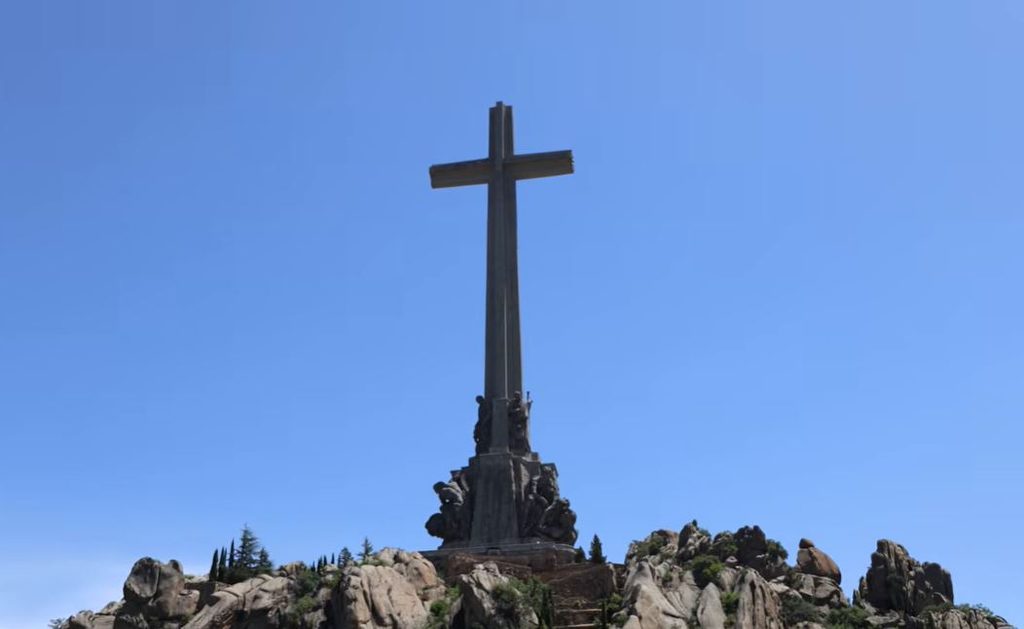
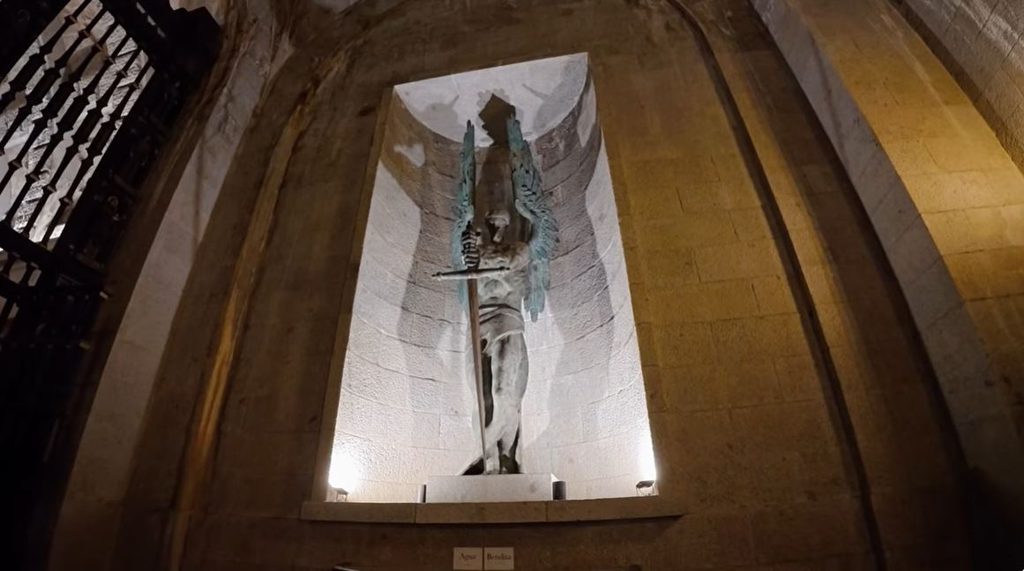
The monument’s most visible feature, piercing the skyline atop the Risco de la Nava cliff, is a colossal stone cross standing over 150 metres (roughly 500 feet) tall — often cited as the tallest Christian cross in the world. At its base stand colossal sculptures of the four Evangelists, sculpted by Juan de Ávalos. It’s this cross that gives the monument its fuller original name, “Santa Cruz del Valle de los Caídos” — the Holy Cross of the Valley of the Fallen.
The Underground Basilica
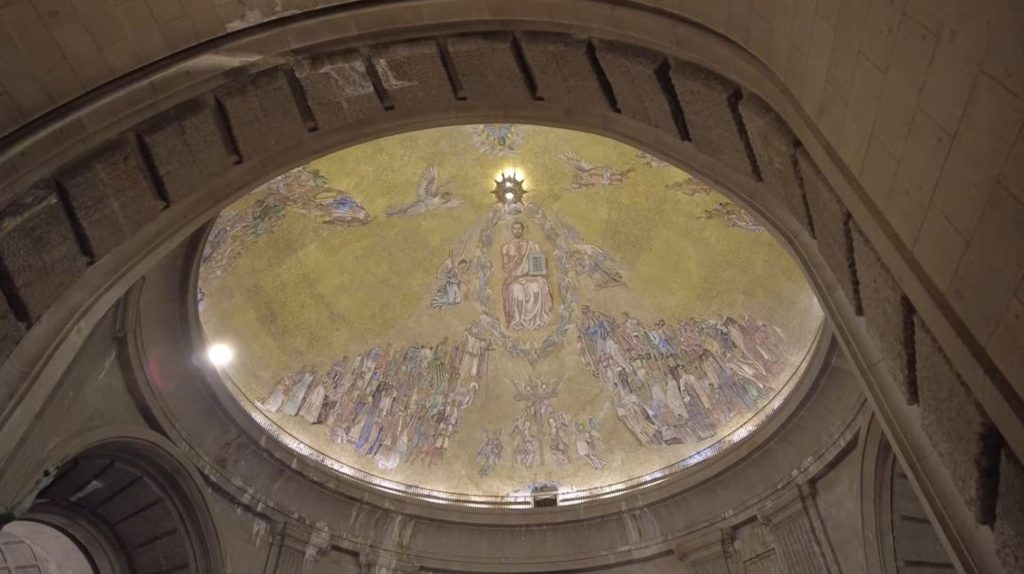
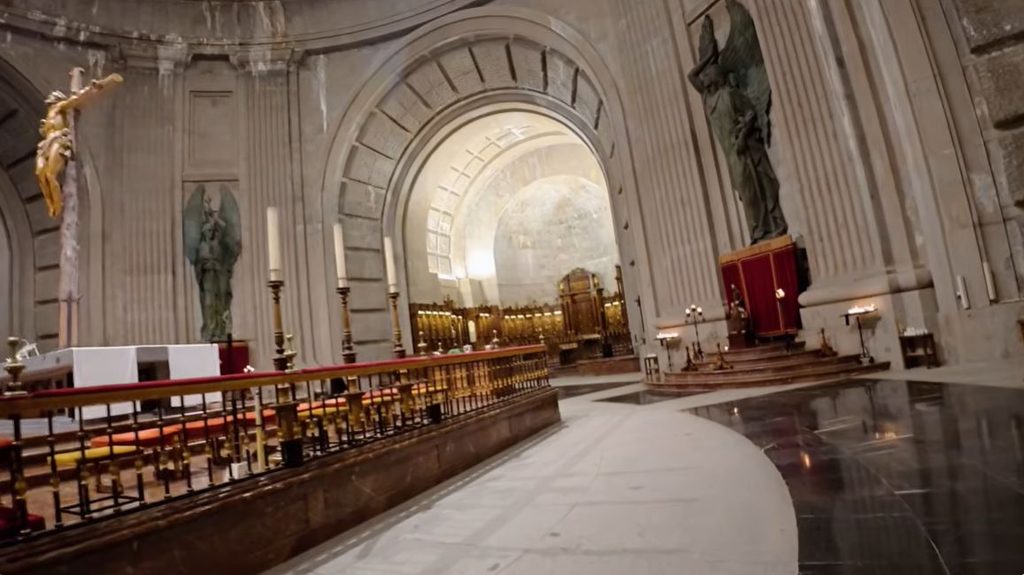
Beneath the mountain lies the site’s most architecturally astonishing feature: a vast basilica excavated directly into the solid granite rock. At 272 metres in length, it’s longer than St. Peter’s Basilica in Vatican City. Its central transept sits directly beneath a massive dome decorated with an intricate mosaic, and the overall effect, by every account, is genuinely overwhelming in person.
The Benedictine Abbey
On the opposite side of the mountain stands a Benedictine monastery, home to a resident community of monks who have maintained a continuous presence at the site since its construction. The monks still hold regular services within the basilica today, and their long-term presence has itself become one of the complicating factors in more recent discussions about the site’s future.
Neo-Herrerian Architecture
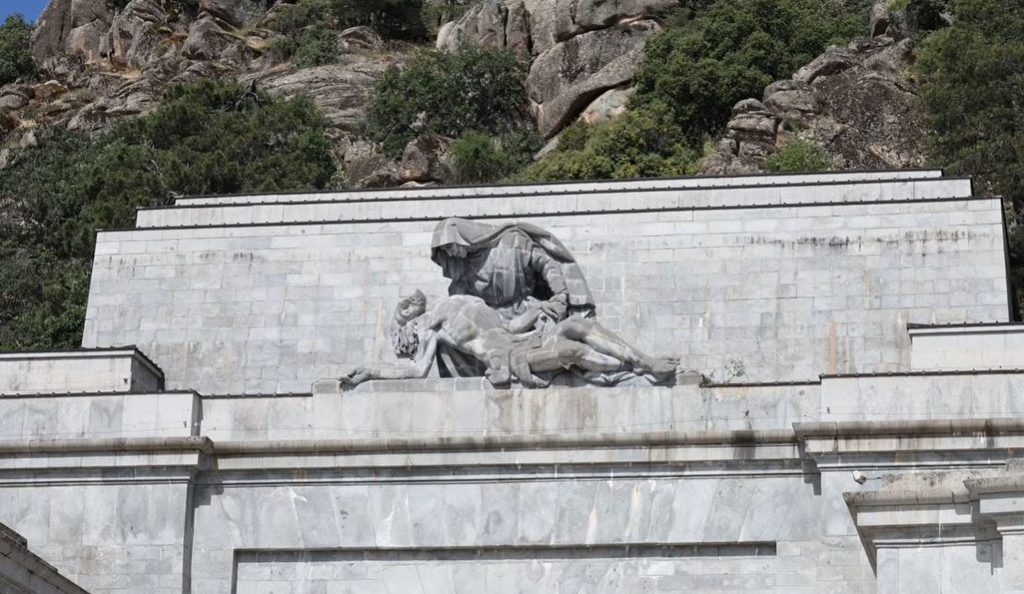
Architecturally, the entire complex is a dramatic example of Neo-Herrerian style — a heavy, monumental aesthetic built from concrete and granite, deliberately designed to evoke the grandeur of historical imperial Spanish power. Some architectural critics have drawn direct comparisons between this style and the classical-fascist architecture favoured by other authoritarian regimes of the same era.
The Juanelos
Less well known, but worth mentioning for anyone actually visiting, are the “Juanelos” — four huge monolithic granite columns encountered shortly after entering the park, each 1.5 metres in diameter and 11 metres high. They’re a curious, easily overlooked feature of a site otherwise dominated by its two headline structures.
A Mass Grave, Not Just a Monument
Perhaps the most important, and least understood, fact about the Valley is what it actually became once completed. From 1959 onward, more than 33,000 bodies of people who died during the Civil War began arriving at its crypts — making it, in practical terms, the largest mass grave in Spain.
Critically, this wasn’t purely a monument to Franco’s own side. Remains from both sides of the conflict were interred here, some voluntarily transferred by families, and others — controversially — moved from mass graves elsewhere without the permission or knowledge of surviving relatives. One of the very first bodies to arrive was that of José Antonio Primo de Rivera, founder of Spain’s fascist Falange party, who had been executed in Alicante in 1936 and was transferred here at the end of 1939, ahead of the wider basilica’s completion.
Franco’s Grave, and Its Exhumation
For over four decades, the Valley held one particular grave above all others in public significance: Francisco Franco’s own. Following his death in November 1975, Franco was buried at the basilica’s high altar, where his remains stayed for 44 years.
That changed on 24 October 2019, following a ruling by Spain’s Supreme Court. In a carefully controlled operation, Franco’s remains were exhumed from the chapel and transported by helicopter roughly 35 kilometres to Mingorrubio cemetery near Madrid, where they were reburied alongside his wife in a family crypt. The exhumation was a private affair, attended only by Franco’s family and a small number of government officials, with media kept at a distance and gatherings by far-right sympathisers explicitly prohibited on the day. Franco’s family opposed the move and pursued an appeal to the European Court of Human Rights, though the exhumation itself went ahead as ordered.
The marble slab that once covered his tomb remains in place at the site today — the tomb itself now simply empty.
Four years later, in 2023, José Antonio Primo de Rivera’s remains were also exhumed from their prominent position near the altar, in a further step toward what the Spanish government has termed the “de-Francoization” of the site.
The Democratic Memory Law and the New Name
The formal legal foundation for these changes came in October 2022, when Spain’s government passed the Democratic Memory Law. Building on an earlier 2007 Historical Memory Law, this legislation went considerably further: it legally reframed the site as a civilian cemetery and memorial dedicated to all victims of the Civil War and the subsequent dictatorship — not merely to those who died fighting for Franco’s side.
As part of this law, the site’s official name reverted to its original geographical designation: the Valle de Cuelgamuros. The law also explicitly forbids political acts or any exaltation of the Franco regime anywhere within the grounds.
Since then, the Spanish government has continued pursuing further changes. Ongoing scientific efforts aim to identify the remains of Republican victims still buried anonymously in the site’s crypts, with limited exhumations of specific victims claimed by relatives judicially authorised in 2025. In November 2025, an international architectural competition produced a proposed redesign for the site’s future, publicly referred to as “The Base and the Cross,” intended to further reshape how the monument is experienced and understood — though, as with much surrounding this site, the proposal has itself proven controversial and contested.
A Site That Remains Deeply Divisive
It’s worth being honest about something no visitor guide to this site can responsibly avoid: the Valle de Cuelgamuros remains one of the most politically sensitive locations in Spain. For some, particularly those nostalgic for the Franco era, it continues to function as a place of pilgrimage and quiet commemoration. For many others, particularly relatives of Republican victims whose remains were moved there without consent, it stands as a painful, unresolved symbol of a dictatorship’s attempt to write its own version of history in stone.
The Spanish government’s ongoing efforts — the renaming, the exhumations, the prohibition on political glorification, the proposed redesign — represent a deliberate, if still incomplete, attempt to resolve that tension. Whether those efforts ultimately succeed in “resignifying” the monument, as officials have described it, remains an open and actively debated question in Spanish public life.
Visiting the Valley Today
For anyone planning to visit, the site is managed by Patrimonio Nacional and sits within the municipality of San Lorenzo de El Escorial, in the Community of Madrid. It’s reachable by car from Madrid via the AP-6 or A-6 motorway, connecting onto the M-600, in approximately an hour’s drive.
The complex is open Tuesday to Sunday, closed Mondays for maintenance, generally operating from around 10:00 AM to 6:00 PM, though hours can shift seasonally, so it’s worth checking official opening times before setting out. Standard entry tickets cost around €9, with reduced rates available for seniors and students, and free entry windows typically offered on selected mid-week afternoons.
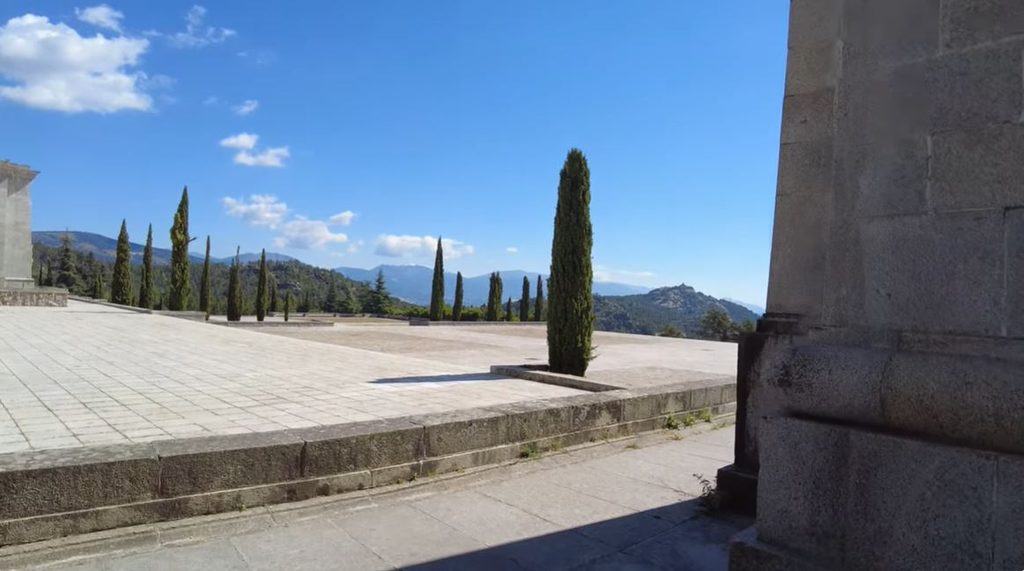
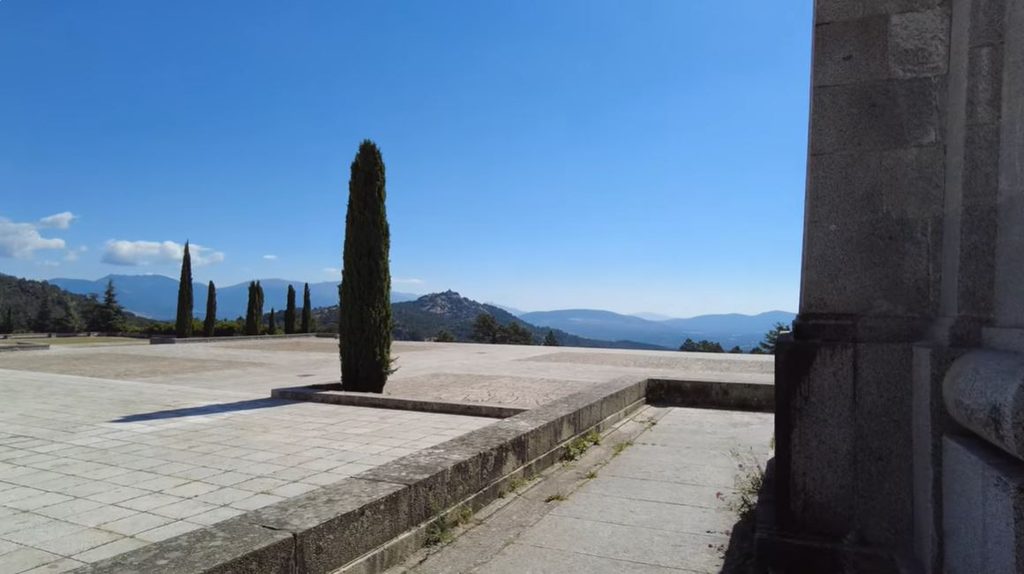
A couple of practical notes worth knowing in advance: the historic funicular railway that once carried visitors up toward the base of the cross is now permanently closed for safety reasons, though the exterior esplanade and the vast basilica interior remain fully open to explore. And given the site’s mountain location, weather can shift quickly — it’s worth bringing warm clothing even when the forecast looks clear.
A Monument Still Being Written
Few sites in Spain carry as much unresolved history in a single location as the Valle de Cuelgamuros. It was conceived as a monument to victory, built substantially through forced labour, transformed into the country’s largest mass grave, and has since become the focus of an ongoing, decades-long national reckoning with how — and whether — a dictatorship’s most imposing physical legacy can ever be fully repurposed into something else.
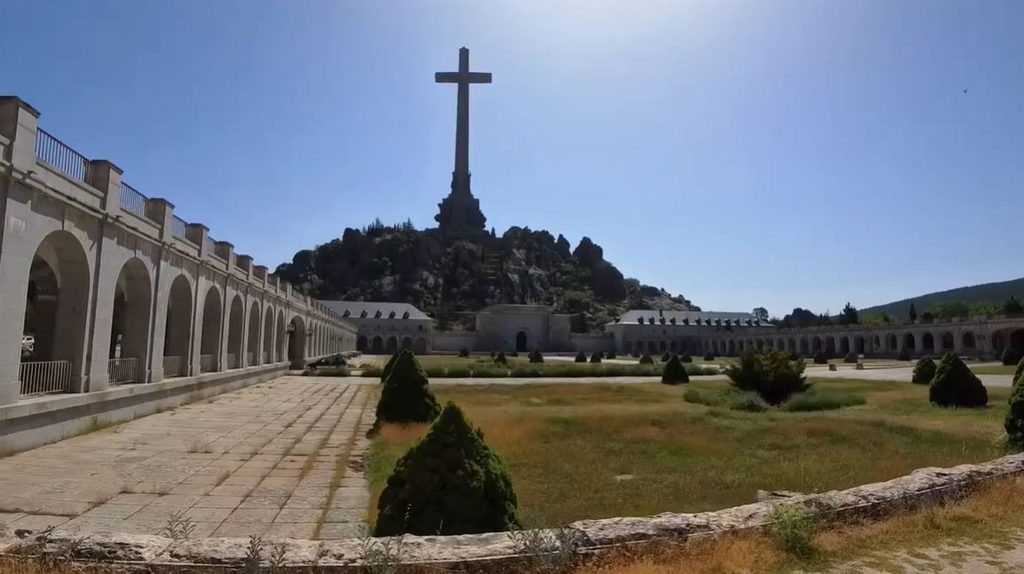
Standing beneath that 150-metre cross, or walking the length of a basilica longer than St. Peter’s, it’s hard not to feel the sheer physical ambition of what Franco’s regime built here. It’s equally hard, once you know the full history, to separate that scale from everything it was built to represent — and everything Spain has spent the years since trying to undo.