Table of Contents
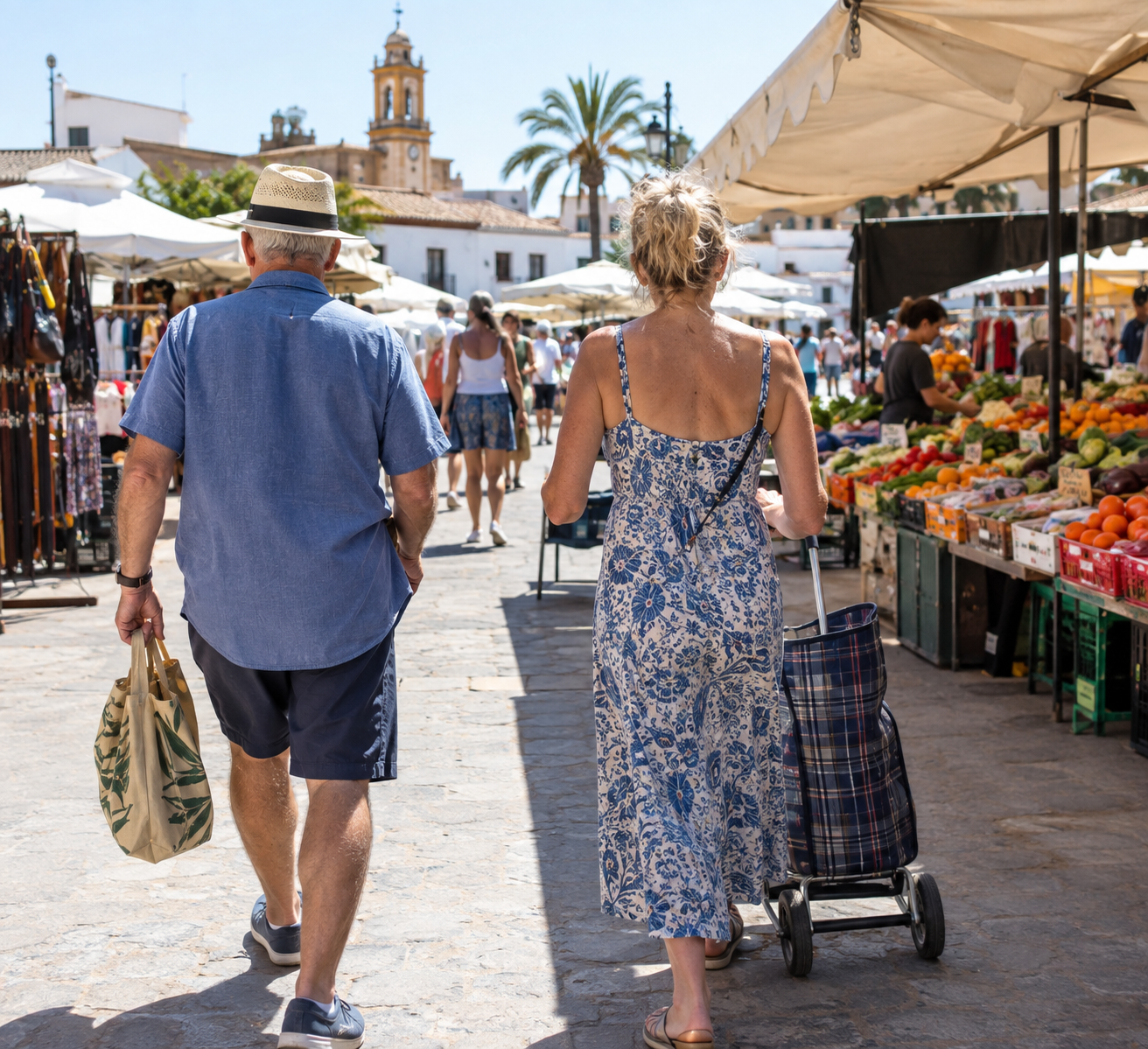
Spend any amount of time walking through a Spanish town in the late morning, and you’ll spot them everywhere: neat, wheeled fabric trolleys, rolling along behind their owners on the way to the market, the panadería, or the local fruteria. To outsiders, it might look like a small, practical object — a wheeled bag, nothing more. To Spain, the carro de la compra is something closer to a national institution, and lately, it’s having a genuine cultural moment.
What Exactly Is a Carro de la Compra?
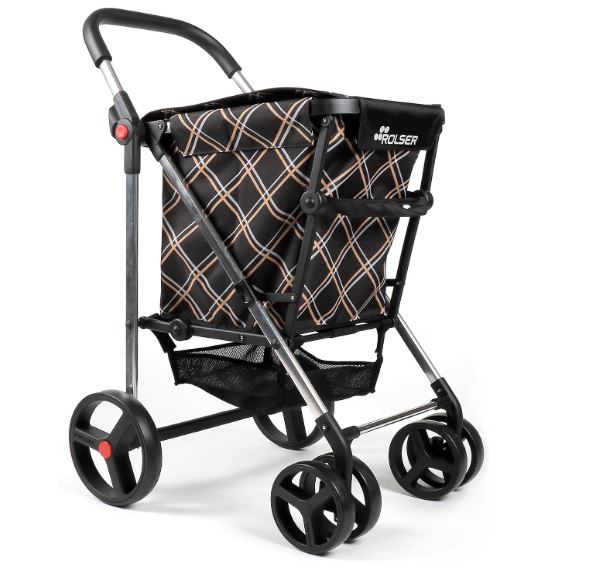
At its simplest, a carro de la compra is a two-wheeled, fabric-covered shopping trolley — a soft-sided bag mounted on a folding metal frame, pulled along behind you rather than pushed. It’s distinct from the metal shopping carts you’d find inside a supermarket; this is a personal, portable trolley that travels with you from home, through the market, and back again, fully loaded with the week’s groceries.
It’s a deceptively simple piece of design. But simple objects, done well and used daily by millions of people, have a way of quietly becoming cultural symbols — and that’s exactly what’s happened here.
A History Rooted in How Spain Actually Shops
To understand why the carro de la compra became so embedded in Spanish life, you have to understand how shopping habits in Spain evolved through the 20th century.
During the 1960s and 1970s, as supermarkets began appearing across the country, they didn’t replace the traditional neighbourhood market — they grew up alongside it. Daily or near-daily trips to the local mercado, the panadería, and small specialist shops remained a core part of everyday life in a way that changed far less in Spain than it did in many other parts of Europe. Buying fresh bread, fish, and produce frequently, in smaller quantities, rather than doing one large weekly supermarket shop, meant Spaniards needed something practical to carry it all home in — repeatedly, on foot, often without a car.
The shopping trolley filled that gap perfectly, becoming an essential companion for carrying groceries home from exactly the kind of frequent, on-foot shopping trips that remained central to daily Spanish life.
Check Out These Rolser Carts
Make shopping effortless with these Rolser Carro de la Compra.
View on AmazonEnter Rolser: The Brand That Became the Category
No history of the carro de la compra is complete without Rolser, the Spanish company that has spent almost 60 years turning a humble object into a genuine household name.
Rolser was the first company in Spain to mass-produce a shopping trolley at scale, and its distinctive branding — combined with a strict policy of never manufacturing anything that didn’t carry the Rolser name — helped it become to shopping trolleys what Hoover once was to vacuum cleaners. Today, according to the family-run company itself, a Rolser trolley can be found in the homes of an estimated 63% of Spaniards. That’s not a niche product; that’s a piece of equipment sitting in the hallway of more than six in ten Spanish households.
The brand’s reach has since gone well beyond Spain’s borders too. What started as passive, incidental exports to countries like France, the Netherlands, and the UK grew into a dedicated export division by the mid-2000s, with Rolser now attending international trade fairs to showcase its designs to markets that had never really considered the humble shopping trolley worth taking seriously. By 2023, the brand had even made its way into the US market, with a sustainably designed model sold at New York’s Museum of Modern Art — a striking validation for an object once dismissed as purely functional, unglamorous, and distinctly un-cool.
From “Granny’s Trolley” to Genuinely Fashionable
Here’s where the story gets more interesting. For a long time, the carro de la compra carried a certain social stigma, at least among younger generations. It was, fairly or not, associated with mothers, grandmothers, and older shoppers — practical, dependable, but hardly stylish. Younger Spaniards, particularly younger men, often avoided being seen with one at all, associating it more with age and frailty than with everyday practicality.
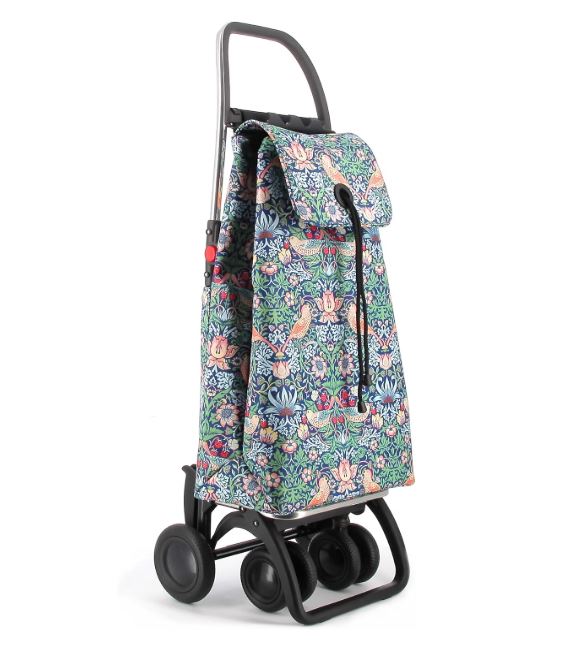
That association wasn’t entirely fair either, historically. Older shoppers unsteady on their feet sometimes used the trolley as an improvised support while walking — not unlike a lightweight walking frame — which only reinforced the “granny’s trolley” reputation for a generation that wanted no part of it. You can even get these in the William Morris colours and patterns,
But reputations, especially around genuinely useful objects, have a way of eventually flipping. In recent years, the shopping trolley has undergone a full-blown style revival in Spain. It’s now common to see people of every age — not just older generations, but younger urbanites, students, and professionals — walking through markets and city streets with a trolley in tow, and increasingly, they’re choosing striking colours, bold checked patterns, and design-forward brands to do it.
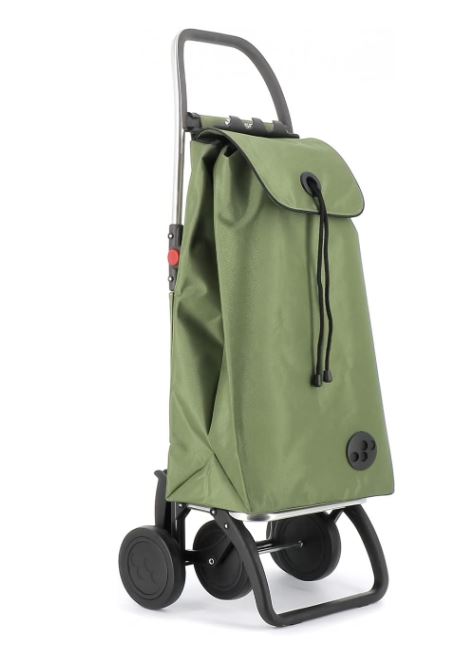
Shopping trolleys, in short, have developed something they never really had before: cult status. Certain brands and colourways now carry real social currency, to the point where trolleys are sometimes parked outside supermarkets and secured with a locking system — not unlike bikes — because a good one is genuinely worth protecting from opportunistic hands.
One striking example of this shift comes from Andalucía, where a very real, very local phenomenon has been dubbed “trolley envy” — the quiet, sideways glances shoppers give each other’s trolleys in busy market aisles, admiring a particularly sharp design or an unusual colourway the way you might eye up a stranger’s car. It’s a small, telling sign of just how far the object has travelled, socially, from purely functional necessity to something people take genuine pride in.
Why It’s Thriving Again Right Now
Beyond fashion, there’s a practical explanation for the trolley’s renewed popularity too, and it fits neatly with broader shifts happening across Europe: a growing preference for sustainable, low-waste, walkable lifestyles.
A shopping trolley requires no fuel, produces no emissions, and neatly sidesteps the need for single-use plastic bags on every grocery run. For anyone living in a dense Spanish town or city centre — where owning a car is often more hassle than benefit, and where the local market or supermarket is a short walk rather than a drive away — a good trolley remains a genuinely practical solution to a very ordinary problem: how do you carry several bags’ worth of shopping home without your arms giving out halfway there.
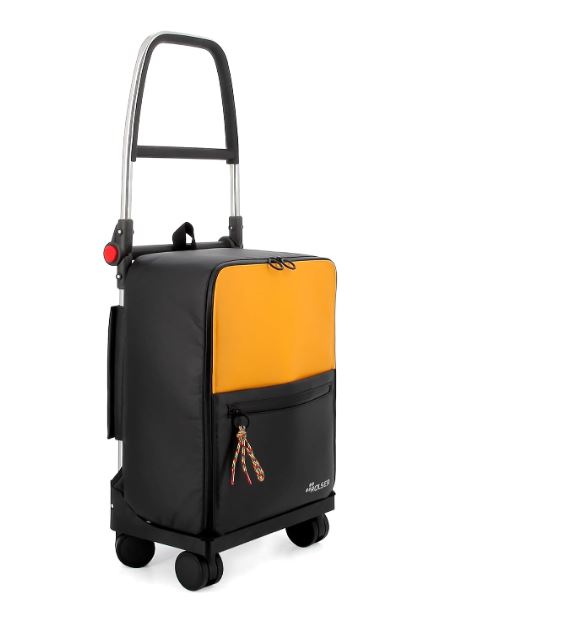
Modern trolleys have kept pace with that renewed demand too. Today’s designs are considerably more versatile than the trolleys of previous decades — foldable frames for easy storage, dedicated insulated pockets for frozen food, and sturdier wheels built to handle cobbled streets and market floors alike. What was once viewed as a single-purpose object for a single demographic has become a flexible, everyday companion suited to a much wider range of people and situations.
More Than Just a Bag on Wheels
It’s easy to underestimate an object like the carro de la compra, precisely because it’s so unglamorous on the surface — a bag, some wheels, a folding frame. But its staying power says something genuinely interesting about Spanish daily life: a culture that never fully gave up on small, frequent, in-person shopping trips, in favour of the once-a-week supermarket sweep that came to dominate elsewhere.
The trolley endured because the habits around it endured. And now, decades after it first became a fixture of daily Spanish life, it’s doing something few purely functional objects manage: becoming fashionable on its own terms, embraced by a generation that once wanted nothing to do with it.
Next time you see someone rolling a trolley through a Spanish market — check the brand, check the colour, and don’t be surprised if it’s better dressed than you are.


