If you’re planning to visit the town hall, sort out some paperwork, open a bank account or finally chase that appointment you’ve been putting off, you might want to take a quick look at the calendar first.
Early December brings one of Spain’s most famous traditions: the December puente.
For many people, it’s the perfect excuse for a mini-break, a family getaway, Christmas shopping or simply doing as little as possible for a few days. For everyone else, it’s one of those moments when Spain seems to collectively decide that whatever can wait until next week probably should.
And in 2026, the dates line up rather nicely.
So, What Is A Puente?
The word puente literally translates as “bridge”.
In Spain, it refers to bridging a public holiday and a weekend to create a longer break. If a holiday falls on a Tuesday, for example, many people will take Monday off to create a four-day weekend.
It’s one of those wonderfully practical Spanish inventions that locals have perfected over the years.
The December puente is perhaps the most famous of them all because it combines two important dates from the national holiday calendar and arrives just as the festive season is getting underway.
Why December 2026 Is Special
This year, the timing works particularly well.
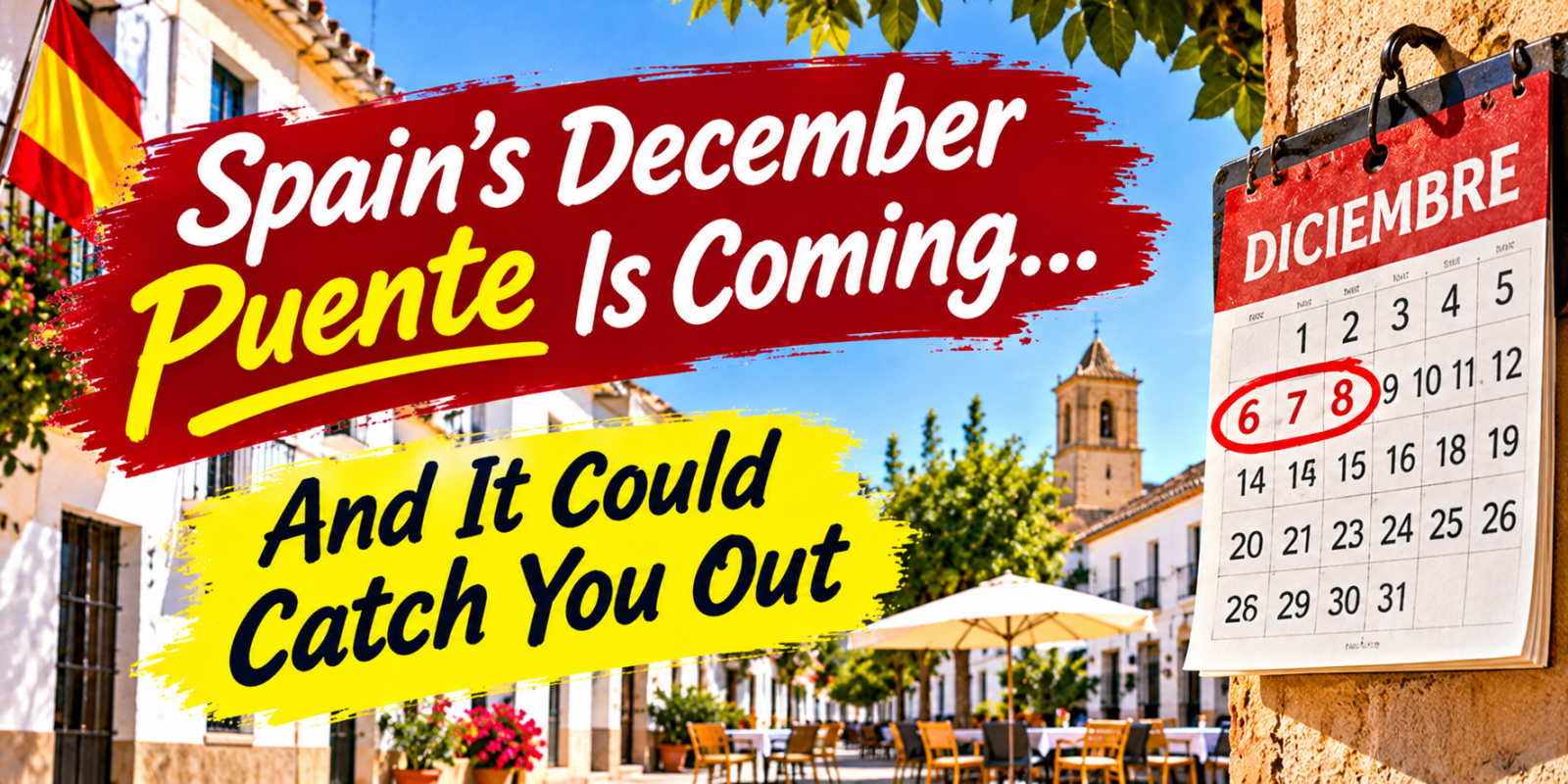
Constitution Day falls on Sunday 6 December, with the substitute holiday observed on Monday 7 December in several regions. That is followed immediately by the national holiday on Tuesday 8 December.
For many workers, that means a four-day long weekend stretching from Saturday through to Tuesday, with normal business not resuming until Wednesday.
Of course, this is Spain, so things aren’t quite that simple.
Not Every Region Gets The Same Break
One thing newcomers often discover is that public holidays in Spain can be a bit of a postcode lottery.
While 8 December is observed nationally, the Monday holiday depends on where you live.
In regions such as Andalucía and Murcia, many people will enjoy both Monday and Tuesday as public holidays.
Meanwhile, in other areas, Monday may remain a normal working day, at least officially.
The reality is that plenty of people choose to take annual leave anyway, creating an unofficial long weekend even where Monday isn’t technically a holiday.
That’s why it’s always worth checking opening hours rather than assuming a business will be operating normally.
Get bus and train tickets in advance from Omio if you’re planning on travelling out of town.
The Great Spanish Slowdown
Officially, Friday before the puente is just another working day.
Unofficially, many people have already mentally packed their suitcase by lunchtime.
If you’ve lived in Spain long enough, you’ll know exactly how this works. Roads become busier, holiday destinations fill up, and that email you’re expecting suddenly becomes a problem for next Wednesday.
It’s not that everything shuts down completely.
It’s simply that Spain starts getting into holiday mode.
Government offices may be closed, appointments can be harder to secure, and businesses often operate with reduced staffing levels.
If something is genuinely important, getting it sorted before the puente begins is usually the safest option.
What Could Be Affected?
Town Halls And Government Offices
If your plans involve paperwork, certificates, licences, padrón appointments or anything involving public administration, allow extra time.
Many offices will close during the applicable public holidays and may face backlogs when normal service resumes.
Banks
Although online banking carries on as normal, physical bank branches generally follow local holiday schedules.
That means some branches may be closed for several consecutive days depending on the region.
Shops And Supermarkets
Spain always likes to keep people guessing when it comes to shopping hours.
Large supermarkets and shopping centres in tourist areas may remain open, while smaller local businesses often take advantage of the holidays themselves.
The safest approach is to check before travelling.
Nobody wants to drive twenty kilometres for a “quick errand” only to discover a handwritten note on a locked door.
Healthcare Services
Emergency services continue as normal, and pharmacies on duty remain available.
However, routine appointments, health centres and normal pharmacy opening hours may be affected throughout the holiday period.
Roads And Transport
Expect more traffic than usual.
Many families use the puente as an opportunity to travel, visit relatives or enjoy a few days away before Christmas.
Popular routes can become busier, and transport services may operate revised holiday timetables.
Adding a little extra time to your journey is rarely a bad idea.
Christmas Truly Begins During The Puente
For many people, the December puente marks the unofficial start of Christmas.
Town squares are decorated, festive lights are shining and restaurants begin filling with friends and families enjoying seasonal celebrations.
Even people who aren’t particularly enthusiastic about Christmas often find themselves getting swept up in the atmosphere.
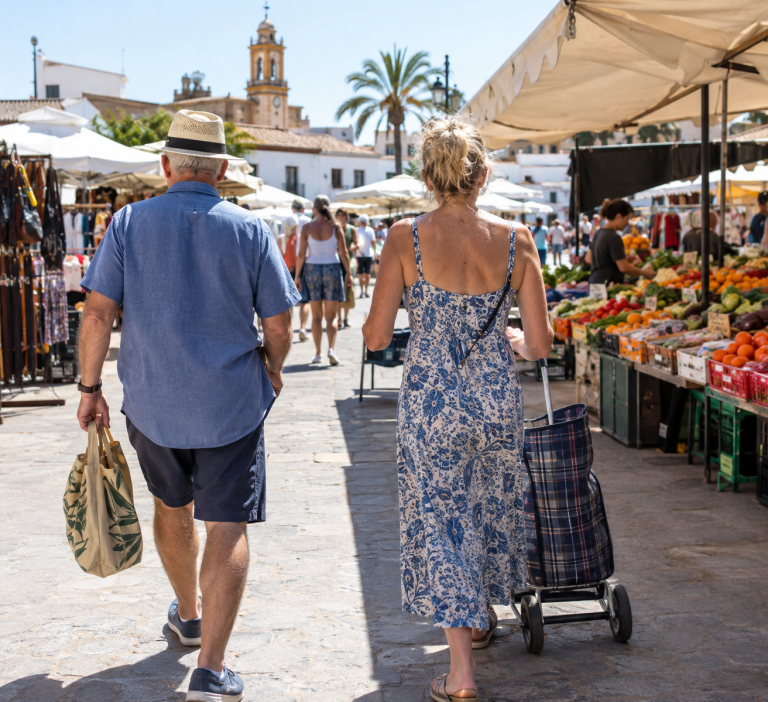
Walk through almost any Spanish town during the puente and you’ll find bustling cafés, Christmas markets, festive displays and plenty of people making the most of the long weekend.
It’s one of the nicest times of year to explore local towns and cities.
Just be prepared to share the experience with thousands of other people who had exactly the same idea.
Don’t Forget Local Holidays
One of the classic mistakes made by both newcomers and long-term residents is assuming that public holidays are the same everywhere.
They’re not.
Alongside national and regional holidays, towns and cities also have their own local fiestas and official days off.
This means one municipality could be operating entirely normally while the town five minutes down the road is effectively closed for the day.
Before booking appointments or making special journeys, it’s always worth checking the calendar of the specific town you’re visiting rather than relying on the holiday schedule where you live.
A Little Planning Goes A Long Way
The December puente is one of those uniquely Spanish traditions that most people grow to appreciate.
For some, it’s the perfect opportunity to relax before the Christmas rush. For others, it’s a reminder that trying to organise official business at the wrong time of year can be an exercise in frustration.
Either way, a little forward planning can save a lot of hassle.
So, if you’ve got paperwork to submit, appointments to attend or errands that absolutely must get done, don’t leave them until the first week of December.
Because while the calendar may say several working days remain, Spain may already be halfway into holiday mode. That’s just part of the charm.