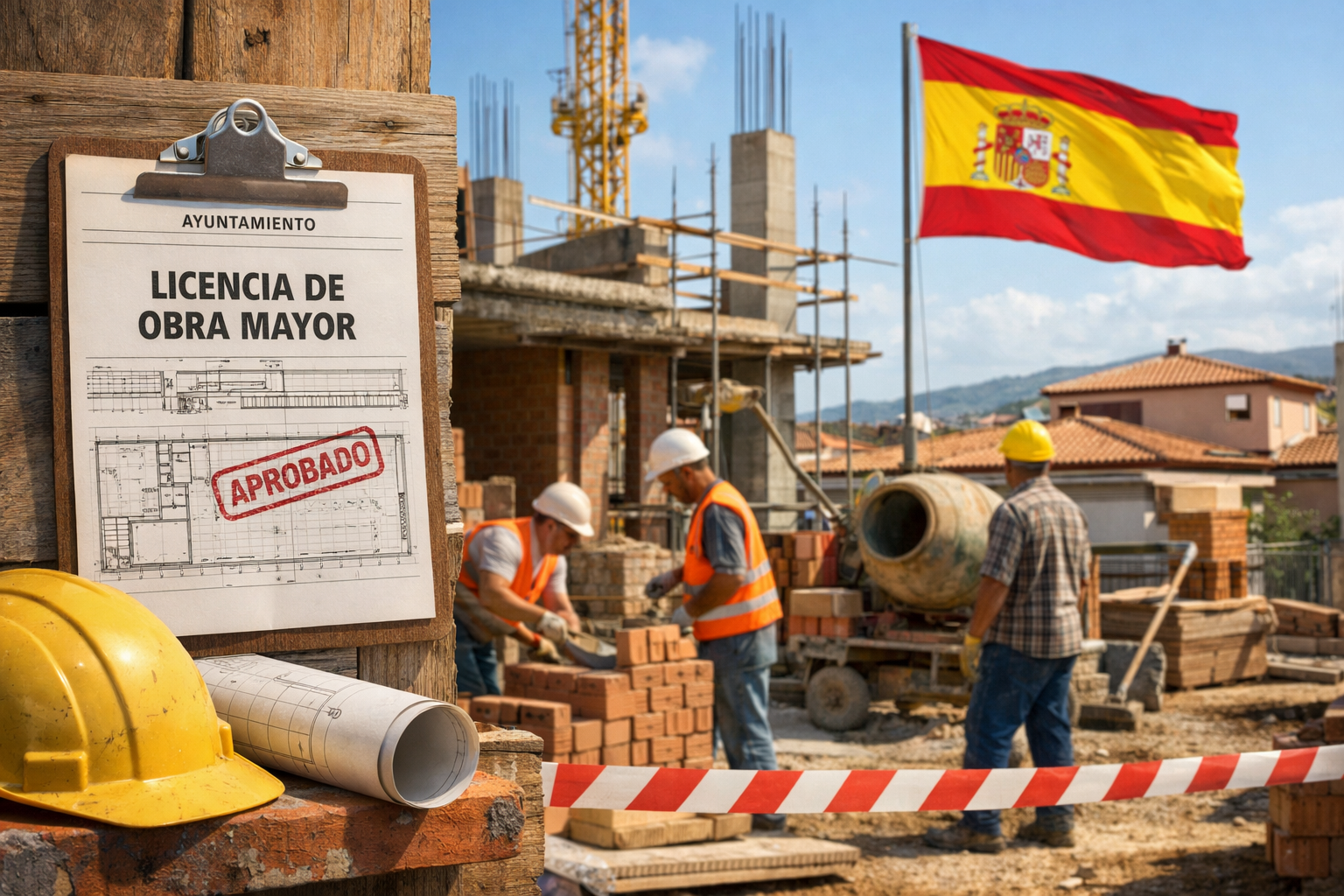
If you’ve ever tried to renovate anything in Spain that involves more than a coat of paint, you’ve probably heard the phrase licencia de obra mayor. It tends to arrive early in the process, usually delivered with a sigh by an architect or a neighbor who’s been through it before. And while the term sounds bureaucratic—and it is—it’s not impossible to navigate. You just need to understand what you’re dealing with and how Spanish town halls think about construction.
Table of Contents
What “major works” really means
A licencia de obra mayor is the permit required for any project that alters the structure, volume, or essential configuration of a building. Think extensions, knocking down load‑bearing walls, adding floors, changing façades, or anything that might make a building inspector raise an eyebrow. Cosmetic changes fall under obra menor, but once you cross into structural territory, you’re in the land of major works.
This distinction matters because the process, cost, and scrutiny increase dramatically. Municipalities want to ensure safety, urban coherence, and compliance with planning rules. They also—let’s be honest—want to collect the corresponding taxes and fees.
Before you even touch a brick
The first step is almost always hiring an architect. Not a friend who “knows about construction,” but a licensed professional who can produce the technical project required by the town hall. Without that project, the application to work on your house won’t even be accepted.
A good architect will also help you understand local planning rules, which vary wildly from one municipality to another. In some towns, adding a small rooftop terrace is fine; in others, it’s practically a diplomatic incident. If you’re unsure what rules apply, ask your architect or check the Plan General de Ordenación Urbana—the urban planning bible of each municipality.
The paperwork dance
Once the project is ready, you submit it to the town hall along with the application form, proof of ownership, and the architect’s documentation. This is where the rhythm slows. Spanish bureaucracy doesn’t rush, and major works permits can take weeks or months to approve.
During this time, the technical office reviews the project, sometimes asking for clarifications or modifications. It’s normal. Annoying, but normal. The key is patience and a good professional who responds quickly to municipal requests.
You’ll also be asked to pay the ICIO (a construction tax) and the tasa urbanística (a fee for processing the permit). These are calculated based on the project budget—another reason architects often prepare two versions: the real one and the “administrative” one. The latter is perfectly legal and simply reflects the standardized cost tables used by municipalities.
When the permit finally arrives
Once approved, you’ll receive the resolution authorizing the works. Keep it handy. Inspectors can and do show up, especially in smaller towns where everyone knows everyone else’s business.
At this point, you can start construction—but only with a licensed contractor. Spain takes safety regulations seriously, and major works require a coordinador de seguridad y salud to oversee compliance. Your architect or project manager usually handles this.
A few things people forget
- Neighbors matter. Even if the town hall approves your project, your building’s community statutes might have their own rules. It’s worth checking before you end up in a hallway argument.
- Heritage zones complicate everything. If your property sits in a protected area, expect extra layers of approval. Sometimes from regional authorities, not just the local town hall.
- Deadlines exist. Permits usually expire if you don’t start the works within a certain period. Extensions are possible, but not automatic.
When it’s all over
Once the works are finished, your architect prepares the certificado final de obra, which confirms that everything was built according to the approved project. The town hall may conduct a final inspection. Only after this can you update the property’s official records—useful if you ever plan to sell.
It’s a long road, but not an impossible one. Spain’s construction permitting system is slow, sometimes exasperating, occasionally charming in its own way. And when you finally stand in your newly expanded kitchen or on that long‑dreamed‑of terrace, the paperwork fades into the background.


