Table of Contents
Autónomo in Spain: The Real Deal With Freelancing Down Here
If you’ve spent any time in Spain trying to work for yourself, you’ll have heard the word autónomo thrown around like it’s a common noun. It’s not. It’s a whole life situation.
Being an autónomo simply means you’re self-employed. You could be a web designer, dog trainer, property marketer, musician, or someone who runs a small home-renovation business. If you’re not working for a company with a payroll and a pension scheme, you’re probably an autónomo under Spanish law.
Sounds straightforward, right? Not quite.
So what does autónomo actually mean in Spain?
When someone says they’re autónomo, they’re saying they’re registered as a freelancer or sole trader. That’s it. No fancy corporate structure. Just you, your NIE, and an obligation to pay taxes and social security.
It’s not a company, it’s not a start-up, and it’s certainly not a hobby. It’s the official label for anyone who generates income independently.
In Spain, if you earn money from self-employment, you’re expected to register. Even if you only work occasionally. Even if your income is modest. Even if you’re only here for a year or two.
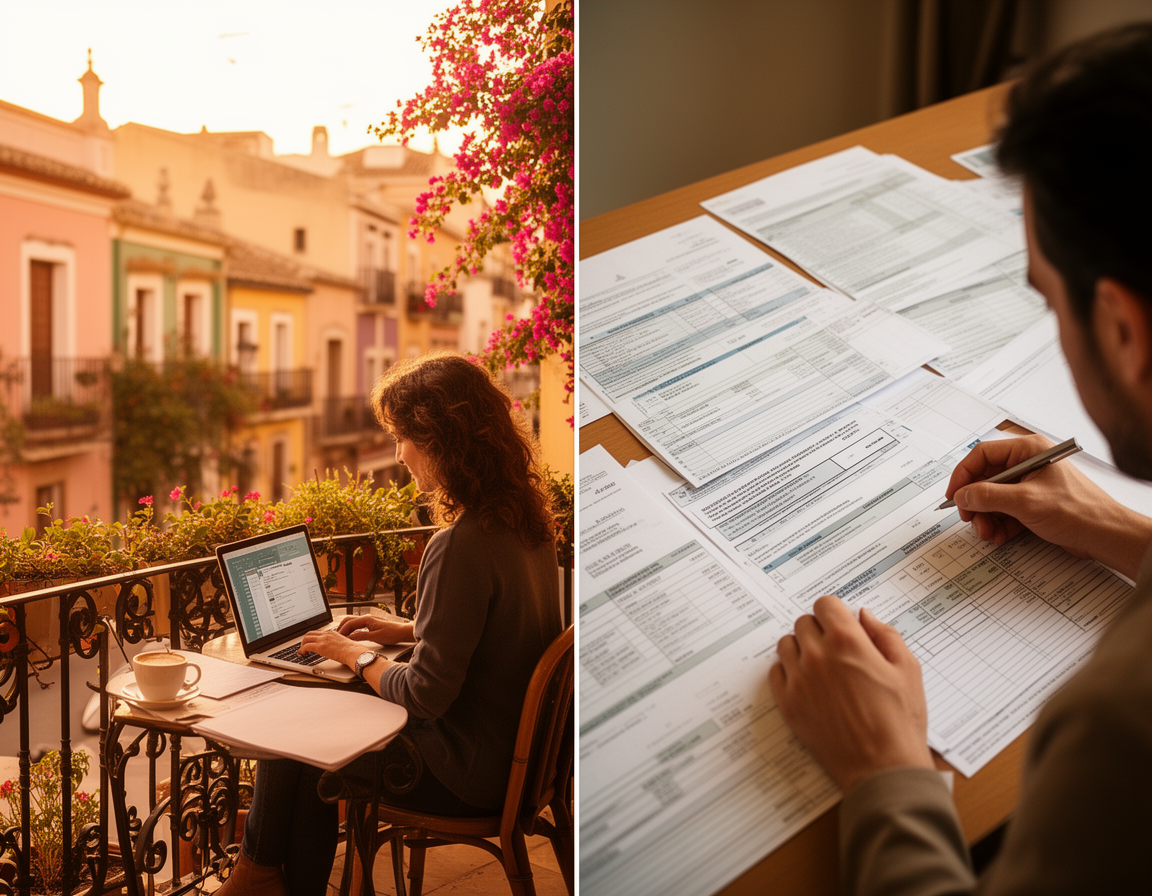
The paperwork: yes, it exists
You can’t just start invoicing and hope for the best. The Spanish system is built on blocks of forms, appointments, and deadlines that don’t always align with the way you think about work.
To register as an autónomo, you need to:
- Have an NIE
- Fill in form Modelo 036 (or the simpler Modelo 037)
- Register with the Special Regime for Self-Employed Workers (RETA)
- Start paying social security
- File quarterly VAT and income tax returns
There’s also a gestor – a tax agent who knows the system better than you do. And honestly, if you’re not fluent in Spanish and comfortable with bureaucracy, you’ll want one.
The Spanish government explains the process in detail on their official tax portal. You can find the full registration steps and forms on the Agencia Tributaria website.
The money side: what you actually pay
Here’s the bit nobody tells you until you’re already in the system.
As an autónomo, you pay two main things:
1. Social security (cuota de autónomos)
This gives you healthcare access and a state pension. There used to be a flat rate; now it’s more income-based.
In 2025, the minimum contribution is around €200 per month, based on projected earnings up to €670/month net. The maximum climbs to around €590 per month for monthly profits over €6,000.
New autónomos can get a tarifa plana – a reduced rate for the first 12 months, often around €87 per month. That’s a big deal when you’re starting.
You can adjust your income estimate up to six times a year, so you don’t get stuck paying too much if your business slows down.
2. Taxes
You’ll pay:
- IVA (VAT), usually 21% on your invoices
- IRPF (personal income tax), progressive from 19% to 47%
- Modelo 130 quarterly income tax
- Modelo 303 quarterly VAT
- Modelo 100 annual tax return
Yes, you file even if you made nothing that quarter. Spain doesn’t really do “no income, no form”.
What you can deduct
There are some deductions, but they’re not as generous as the UK’s.
You can deduct:
- Home office costs (a flat 7% allowance up to €2,000 if you can’t justify exact figures)
- Business phone and internet
- Equipment and tools
- Private health insurance up to €500 per person
- Social security contributions (yes, they’re tax-deductible)
- A 20% profit deduction in your first two profitable years (under certain conditions)
You’ll need receipts, invoices, and proper records. If you’re running multiple websites or doing affiliate marketing, you’ll want to keep everything tidy.
Autónomo vs. SL: when do you need a company?
Many people start as autónomo and later move to an Sociedad Limitada (SL) – a limited company.
Why? Because an SL can be more tax-efficient once profits grow. You pay corporation tax instead of personal income tax, and you can separate salary from dividends.
But an SL is more complex, more expensive to set up, and more paperwork. For most digital entrepreneurs and small operators, autónomo is the right starting point.
The lifestyle side
Being an autónomo in Spain is not just about tax forms. It’s about how you live.
You’re not employed by a company, so you don’t get sick pay, holiday pay, or a pension scheme. You’re on your own. If you don’t work, you don’t earn. If you’re sick, you need private insurance.
But you also have total freedom. You can work from Rojales, Alicante, Valencia, or anywhere with good Wi‑Fi. You can set your own hours, choose your clients, and build your own projects.
For people who value independence, that’s worth the admin.
The truth about being an autónomo
The system is bureaucratic, yes. It’s not elegant. But it works.
Thousands of expats, digital nomads, and locals work as autónomos every year. They pay their taxes, file their forms, and keep going.
If you’re considering it, do this:
- Get a good gestor
- Budget for social security and taxes
- Keep your receipts
- Don’t underestimate the admin
- Accept that Spain does things differently
Being an autónomo in Spain isn’t pretty, but it’s real. And for lots of people, it’s the only way to work here properly.