
Research August And Research Winter Too
Buying a property in Spain is exciting. I’ve always suggested to people they need to rent before buying, once they’ve found an area they have fallen in love with. Ideally a 6 month rental so you experience the summer and also winter.
You’ve spent three days being driven around by an estate agent. You’ve seen fourteen apartments, six villas, something described as a finca that appeared to have more goats than bedrooms, and one property where the estate agent assured you the motorway was:
“Not really noticeable.”
Then you find it.
The one.
Beautiful terrace. Lovely kitchen. Pool. Views. Plenty of space for visitors. Even somewhere to park the car.
You can already picture yourself sitting outside with a glass of wine telling everybody back in Britain:
“Best thing we ever did.”
But before you hand over the deposit, there’s something else you need to do.
You need to research where you’re actually going to live.
Because you’re not just buying a house in Spain.
You’re buying the area around it — 365 days of the year.
And if you’re moving permanently, I’d go one step further.
Don’t just research the area. Research August.
The Spain You View May Not Be The Spain You Get
That Peaceful Viewing In March Can Be Very Misleading
This is especially important if you’re viewing properties outside the main summer months.
Visit a town in March and you might find a wonderfully peaceful Spanish community.
There’s parking everywhere.
The communal pool is deserted.
You can walk straight into the restaurants.
The road outside your apartment is silent at night.
Lovely.
Now come back on 15 August.
Suddenly there are cars parked everywhere, every apartment appears occupied, you’ve got 97 children in the communal swimming pool and the town fiesta has installed something resembling the main stage at Glastonbury 400 metres from your bedroom.
And apparently the DJ doesn’t finish until 5am.
Same property. Same town. Completely different experience.
If you’re planning to live permanently in Spain, you need to understand what your chosen location is like at its busiest, hottest and noisiest, not simply on the Tuesday morning in April when the estate agent showed you around.
1. Research The Heat — Not The Holiday Temperature
“We Love The Spanish Weather”
Most of us do.
It’s one of the reasons many of us moved here.
But there’s an enormous difference between enjoying 28°C beside a hotel swimming pool for a fortnight and living your normal life during a prolonged spell of 38–42°C temperatures.
On holiday, when it gets too hot, you go back to the air-conditioned hotel room.
When you live here, the bins still need taking out.
The dog still needs walking.
You’ve still got shopping to do.
Appointments don’t magically disappear because it’s 39°C.
And depending on where you live, the heat itself isn’t necessarily the biggest issue.
Humidity And Altitude Can Completely Change Things
We used to live inland in Granada province at around 850 metres above sea level.
It got seriously hot.
But the heat was very different from what we experience now on the Costa Blanca, where humidity can make a lower temperature feel far more uncomfortable.
Our old property was a cave house.
No air conditioning, even though we originally considered a portable unit; the cave didn’t need it.
And yet the cave itself remained remarkably comfortable because of the thermal mass surrounding it.
Move 100 kilometres and your experience of a Spanish summer can be completely different.
That’s why looking at the average annual temperature for a province tells you very little about what living in your particular property will actually feel like.
Research August. Not the average.
2. Visit The Area At The Worst Possible Time
Stop Trying To See Spain At Its Best
This sounds ridiculous when you’re spending money travelling over to look for property.
But if you’re seriously considering buying somewhere, I’d deliberately try to visit when conditions are least attractive.
If you’re buying in a busy coastal resort?
Visit in August.
If you’re buying somewhere heavily dependent on tourism?
Visit in January.
If you’re buying an isolated inland property?
Go there after several days of bad weather.
Why?
Because you already know you’ll love sitting beside that swimming pool on a beautiful May afternoon.
That’s the easy bit.
What you need to discover is whether you’ll still love living there when Spain isn’t putting on its best behaviour.
The €250,000 Question
Stand outside the property and ask yourself:
“Would I still want to live here if today was like this for six weeks?”
That’s a much more useful question than:
“Where would we put the barbecue?”

3. Research The Noise — Especially The Fiestas
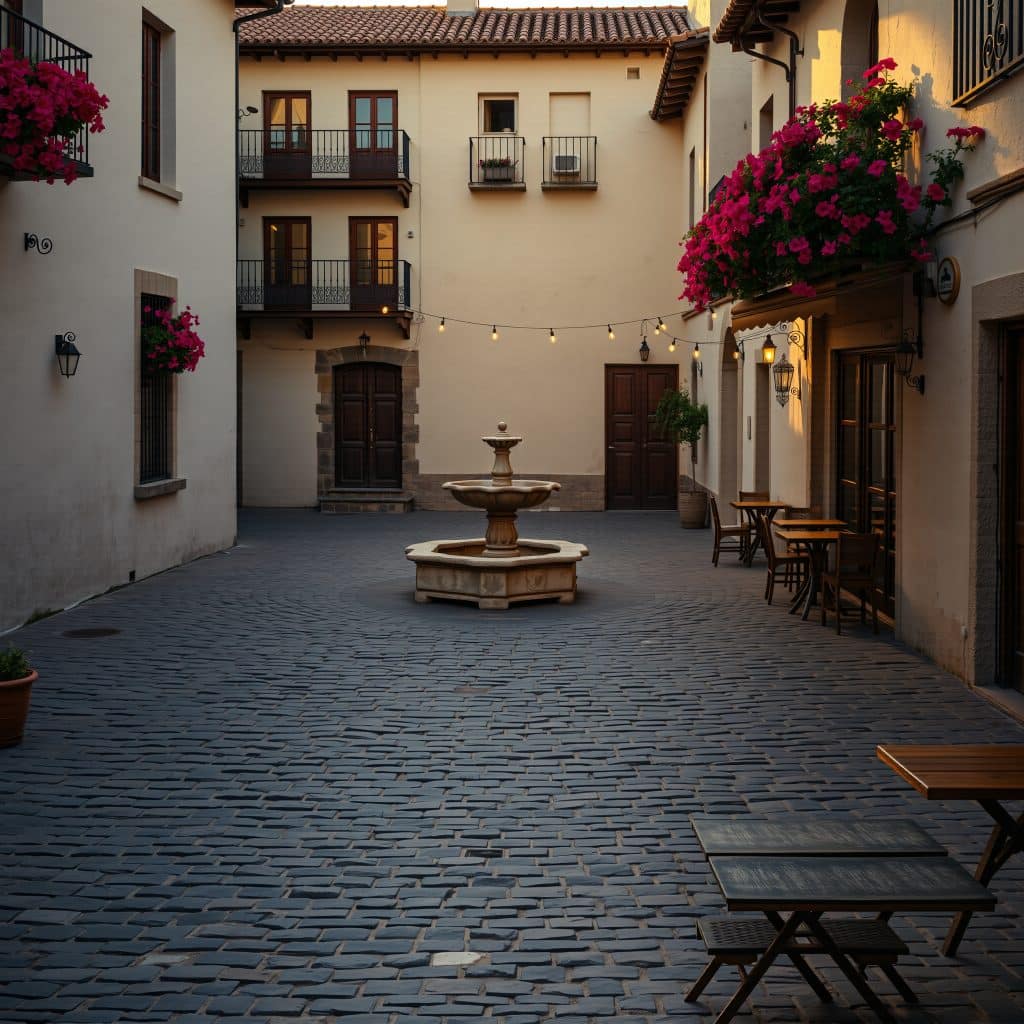
That Quiet Plaza Might Have A Secret
The estate agent says:
“You’re only five minutes’ walk from the town square.”
Brilliant.
Bars.
Restaurants.
Shops.
Cafés.
Everything within walking distance.
That’s genuinely a huge advantage.
Until August.
Then you discover exactly what the town square was designed for.
Fiesta.
Stage.
Speakers.
Fireworks.
Live bands.
Disco.
Another disco.
Something involving drums.
Then, just when you think they’re packing everything away…
Read my Facebook post on this —> HERE
Another bloody disco.
Spanish fiestas are fantastic and they’re an important part of Spanish culture.
But if you need silence to sleep, buying 200 metres from where the town holds its annual fiesta might not have been your finest piece of research.
Don’t move to Spain and then demand Spain stops being Spanish.
Find out what happens around your potential home before you buy it.
4. Research The Neighbours You Haven’t Met Yet
Your Empty Urbanisation Might Not Actually Be Empty
Here’s another classic.
You’re viewing an apartment in March.
The communal pool is immaculate.
Nobody is using it.
There are eight sunbeds around it.
You imagine peaceful afternoons reading a book beside the water.
What you haven’t realised is that your apartment is one of 80 properties.
Most are holiday homes.
Fast forward to July and August and those eight sunbeds suddenly have approximately 160 people competing for them.
The apartment upstairs has six relatives visiting from Madrid.
The one opposite is a holiday rental.
Somebody’s grandchildren have discovered inflatable flamingos.
And apparently the swimming pool rules are considered more of a suggestion during August.
None of that necessarily makes it a bad place to live.
But you should know what you’re buying into.
Questions Worth Asking Before You Buy
Ask how many properties are permanent residences.
Ask how many are holiday homes.
Ask whether tourist rentals are permitted.
Ask about the community rules.
And ideally…
Visit during peak season.
5. Research What Happens In Winter Too
August Isn’t The Only Test
There’s another side to this.
You view a property in July.
The terrace is beautifully shaded.
“This is perfect!”
Maybe.
Come back in January.
That same terrace might receive approximately eleven minutes of sunshine before the neighbouring building blocks it until March.
Meanwhile, the south-facing property you rejected because the terrace was “far too hot” in July might be glorious throughout winter.
Orientation matters enormously.
Check The Property For Both Summer And Winter
Think about:
- Winter sunshine
- Summer shade
- Prevailing winds
- Damp
- Heating
- Insulation
- Air conditioning
- Where the sun rises and sets
If you’re moving permanently, you’re not buying July.
You’re buying January as well.
6. Research Everyday Life — Not Holiday Life
Where Is The Supermarket When You’re 75?
One of the easiest mistakes to make is judging an area through holiday eyes.
That beautiful villa 8km outside the village looks idyllic.
Mountain views.
Peace and quiet.
No neighbours overlooking you.
Wonderful.
But where’s the supermarket?
Where’s the doctor?
The pharmacy?
The bank?
The hospital?
The bus stop?
Can you get a taxi?
And what happens if one day you can no longer drive?
At 60, an isolated country property and a car might represent freedom.
At 75, if you’ve lost your licence or simply no longer feel comfortable driving, that same property could become extremely isolating.
Could Either Of You Live There Alone?
This becomes even more important if you’re moving as a couple.
Ask yourself a slightly uncomfortable question:
Could either of us comfortably live here alone?
Hopefully you’ll never need to.
But that’s what future-proofing means.
The perfect property today should ideally still work for you in ten or fifteen years.
7. Research Parking In August
“There’s Loads Of Parking Outside”
Yes.
Today.
You viewed at 11am on a Wednesday in February.
Come back on a Saturday evening in August.
Beach towns and popular tourist areas can transform during peak season.
That convenient parking space outside your apartment might become something you last saw around Easter.
If you need a vehicle every day, private parking can suddenly become considerably more valuable than you thought.
Test The Roads As Well As The Parking
The same applies to traffic.
Drive your likely routes.
Try getting to the supermarket.
Try getting to the motorway.
Try getting to the nearest hospital.
Try getting to the airport.
And do it when the area is busy.
A journey that takes 12 minutes on a quiet February morning might be a very different experience on an August weekend.
8. Research Whether The Town Actually Has A Winter
Some Places Almost Close Down
The opposite problem can be just as bad.
Some places explode into life during summer…
Then apparently get put back in the cupboard until Easter.
You loved the place in July.
Bars everywhere.
Restaurants packed.
Music.
Markets.
People strolling along the promenade until midnight.
You move permanently.
November arrives.
Half the shutters come down.
Your favourite restaurant closes until February.
The beach bar disappears.
Three cafés shut.
And suddenly you’re wondering where everybody went.
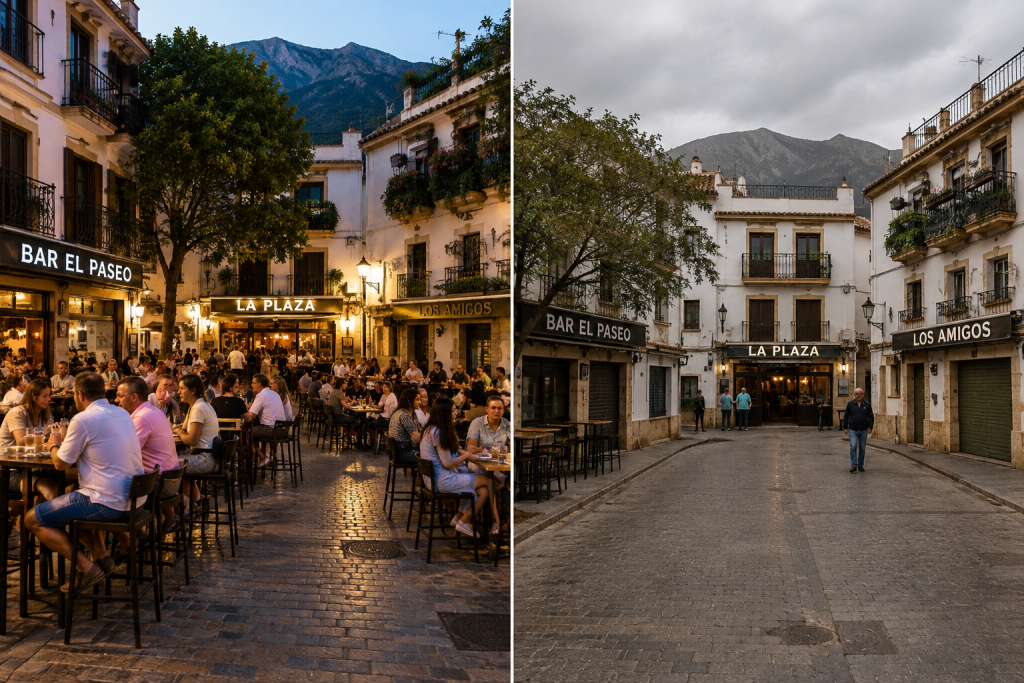
Again, that doesn’t make the town bad.
Some people would consider it absolute heaven.
The important thing is knowing before you buy.
If you want year-round community life, make sure there’s actually a year-round community.
9. Spend Time There Without The Estate Agent
This Might Be The Best Property Advice Of The Lot
Once you’ve found an area you seriously like…
Get rid of the estate agent for a day.
Not permanently.
They’re probably quite nice.
But go exploring yourself.
Have breakfast there.
Go to the supermarket.
Sit in the square.
Drive around at 10pm.
Walk from the property to the shops.
Talk to people who actually live there.
Check the local area at different times of day.
Listen.
Look.
Observe.
Because an estate agent’s job is understandably to show you why you should buy a property.
Your job is to discover why you shouldn’t.
If you genuinely can’t find a good enough reason not to buy it…
Then you might actually have found the right one.
10. The House Can Be Changed — The Location Usually Can’t
This Is The Bit People Forget
Don’t like the kitchen?
Replace it.
Bathroom dated?
Renovate it.
Need air conditioning?
Install it.
Terrace needs shade?
Add an awning.
But you can’t easily move the nightclub.
You can’t turn an isolated hamlet into a town.
You can’t move the neighbouring apartment block so your terrace gets winter sunshine.
You can’t relocate the annual fiesta.
And unless you’ve got significantly more influence than I have…
You’re probably not moving the Mediterranean either.
The boring research you do before buying could ultimately matter far more than whether the kitchen worktops are granite.
Don’t Just Research The House. Research August.
You’re Buying A Lifestyle, Not A Two-Week Holiday
Moving to Spain can be one of the best decisions you’ll ever make.
But don’t research Spain like you’re booking a holiday.
Research it like you’re planning to live here.
Look at the property.
Look at the area.
Look at transport, healthcare, shops, neighbours, parking, accessibility and amenities.
Then look at January and August.
Because the gorgeous villa you fall in love with on a peaceful 24°C morning in May isn’t the whole package.
You’re also buying the 41°C afternoon in August.
The fiesta at 3am.
The packed communal swimming pool.
The January shade.
The closed winter restaurants.
The traffic.
And everything else that comes with actually living in Spain.
My Rule Would Be Simple
Ask Yourself The Right Question Before You Buy
Don’t just ask:
“Could I live in this house?”
Ask:
“Could I live THIS life, in THIS location, twelve months of the year?”
If the answer is still yes…
Now you might be ready to buy.
Just a heads‑up: if you buy anything through the links on this page, I might earn a tiny commission. Nothing dramatic — it basically goes straight into my G&T fund. Don’t worry, I won’t waste a single euro; it’ll be responsibly invested in ice, tonic, and a slice of limón.


