Villa Gadea, L’Olla and the Castell de l’Olla: A Historical Overview of an Altea Landmark
Table of Contents
Introduction
On the hillside above the bay of L’Olla in Altea stands one of the town’s most architecturally and historically significant 19th‑century buildings: Villa Gadea. Today, the name is best known as a hotel brand and as the backdrop to the Castell de l’Olla, one of the Mediterranean’s most spectacular fireworks displays. Yet the origins of the villa, the estate and the festival are rarely explained to visitors.
This article traces the history of Villa Gadea from its construction in the late 1880s to its present‑day role in Altea’s cultural landscape, and sets it in the context of the L’Olla bay and the Castell de l’Olla fireworks tradition.
Vicente Gadea y Orozco: The Man Behind the Name
The story of Villa Gadea begins with Vicente Gadea y Orozco (1840–1904), a prominent figure in late‑19th‑century Valencian public life.
Born in Altea on 19 October 1840, Gadea pursued a distinguished career as a jurist, academic, politician and writer:
- He became a professor and later rector of the University of Valencia, serving in that role on three occasions between 1884 and 1897.
- He was a senator in the Spanish Cortes during the legislatures of 1889–1890 and 1903–1904.
- He held important positions in public education and cultural institutions, including president of the Sociedad Econimica Valenciana (Valencian Economic Society).
- As a journalist, he contributed to publications such as El Magisterio Espanol.
- In recognition of his services, he was granted the noble title Marquis de Gadea by the Pope. ]
Gadea maintained close ties with influential figures of his time, including the Marquis de Campo, Cardinal Benlloch and Prime Minister Canalejas, many of whom are recorded as having spent extended periods at his villa in Altea.
The Construction of Villa Gadea (1888–1890)
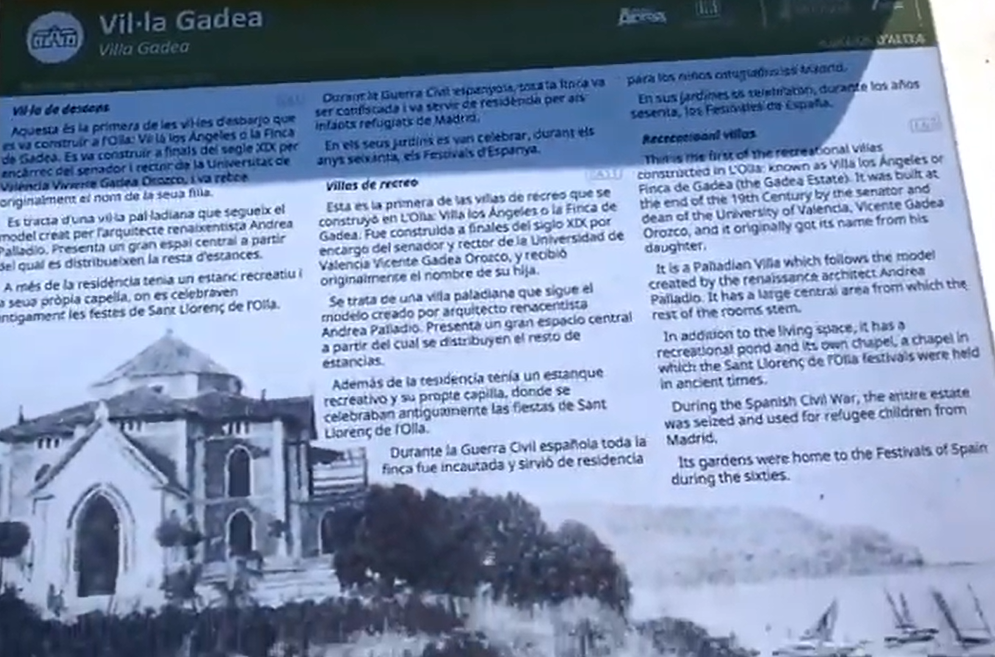
Between 1888 and 1890, Vicente Gadea commissioned a grand summer residence on the coastal hillside above what is now known as the bay of L’Olla.
The villa was designed by José Juan Camaña Lleymon (also written Juan José Camaña), a diocesan architect active in Valencia and the surrounding region. Camaña was involved in significant ecclesiastical projects, including work on the cathedral of Xativa, and was part of the professional circle that shaped much of the religious and aristocratic architecture of the period. ]
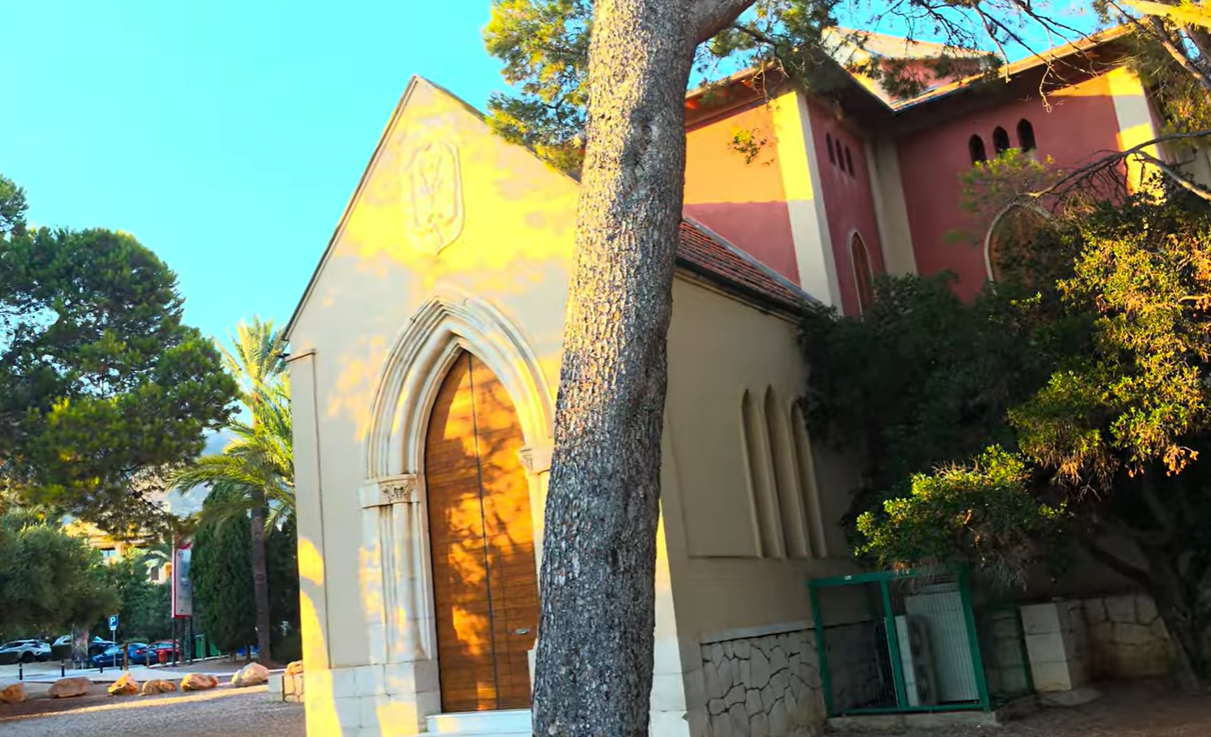
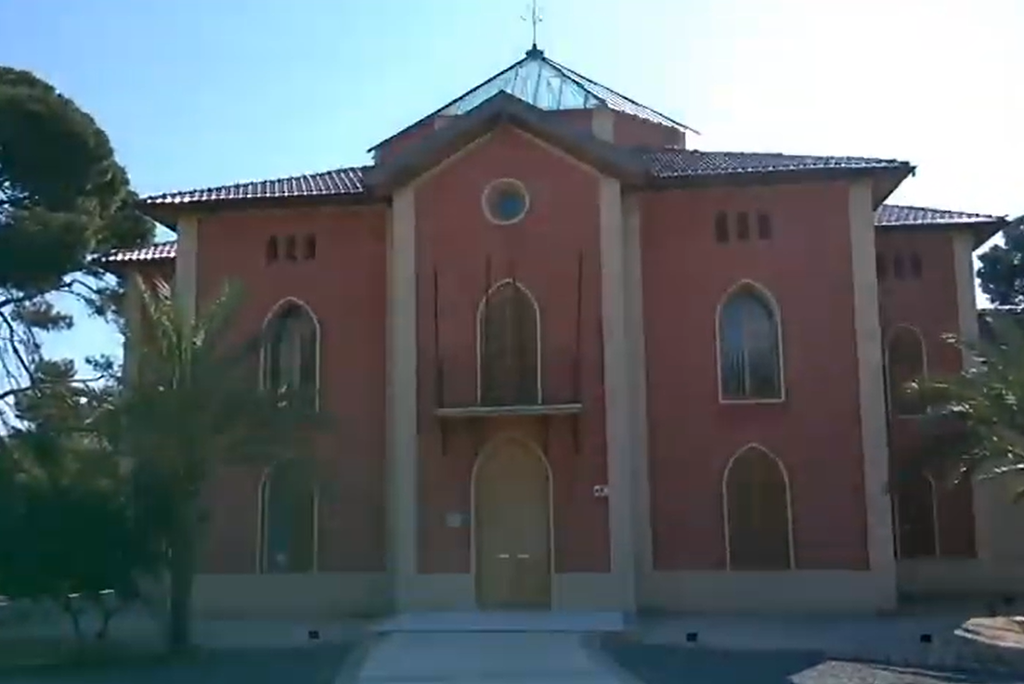
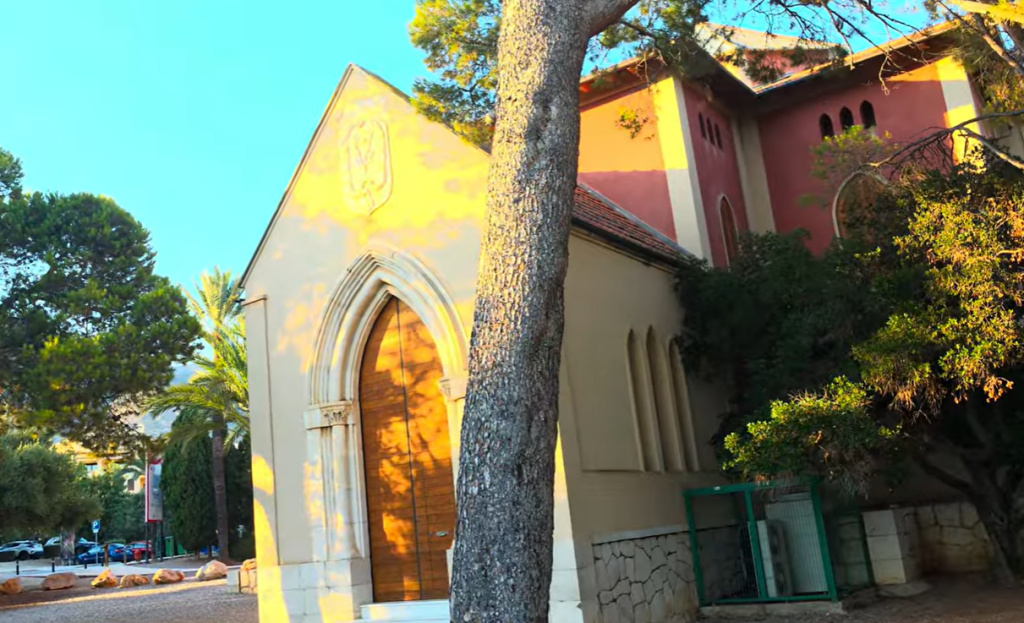
Villa Gadea was conceived as a neopalladian bourgeois villa, elegant in proportion and detail, set within an extensive landscaped park of considerable aesthetic and botanical value. Contemporary descriptions emphasise its refined lines, arched windows, and harmonious integration with the surrounding landscape.
The estate quickly became a social hub for the elite:
- Politicians, clergy, academics and members of the high bourgeoisie gathered there during the summer months.
- It functioned as a symbol of Gadea’s status, intellectual influence and connection to national power networks.
- Some sources refer to the property as Villa dels angels (Villa of the Angels), reportedly in honour of Gadea’s daughter, Maria de los angeles.
The original villa, with its pink facade, arched windows and green‑tiled roof, remains one of the most recognisable historic buildings in Altea.
Inheritance, Dispute and Municipal Acquisition
After Vicente Gadea’s death in 1904, the title and estate passed to his daughter. When she died in 1950 without direct heirs, the succession became legally complicated.
Historical accounts note:
- A prolonged inheritance dispute among potential claimants.
- Eventual resolution in favour of the municipality of Altea, which acquired much of the estate, including the main villa.
Over the following decades, parts of the property were repurposed for various municipal and public uses. At one stage, sections of the estate even housed the local police headquarters, reflecting the building’s transition from private aristocratic residence to public asset.
The Modern Hotel Complex: SH Villa Gadea
In the early 21st century, part of the former Gadea estate was redeveloped as a luxury hotel complex. The SH Villa Gadea hotel, constructed in the 2000s, occupies a portion of the original grounds and explicitly references the historic name in its branding.
While the hotel is a modern construction, it stands in direct continuity with the 19th‑century villa:
- The original historic villa remains on the site, preserved as a distinct architectural element.
- The hotel’s name and marketing deliberately evoke the prestige and history associated with the Gadea family.
- The location, overlooking the bay of L’Olla, remains unchanged.
This layering of old and new makes the site a tangible example of how Altea’s built heritage has been adapted to contemporary tourism while retaining key historical structures.
L’Olla: The Bay and Its Name
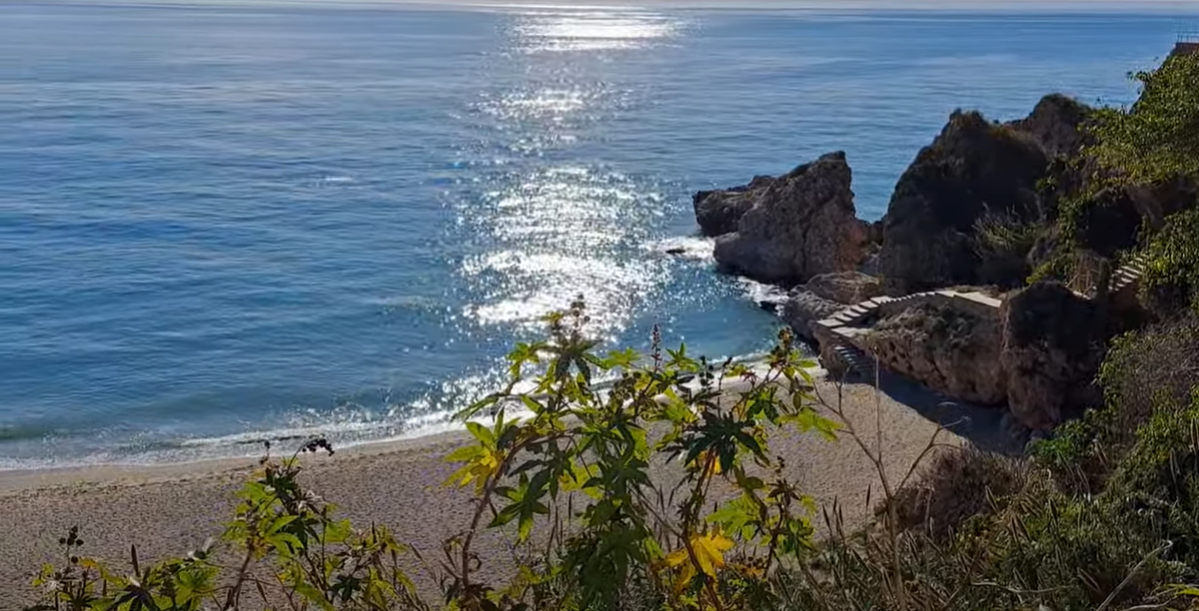
Below the villa lies the small bay of L’Olla, whose name means “the pot” in Valencian. The toponym refers to the way the sea curves around the rocky islet known as l’Illeta, creating a sheltered, pot‑like indentation in the coastline.
L’Olla has long been a focal point for local leisure and festivities:
- Its sandy beach and clear waters make it one of Altea’s most popular swimming spots.
- Its orientation and open view of the horizon make it an ideal natural amphitheatre for large‑scale public events, particularly fireworks.
The Castell de l’Olla: Origins and Evolution
The Castell de l’Olla is now one of the most important pyrotechnic events on the Spanish Mediterranean coast. Its origins, however, are relatively recent and deeply local.
Early Fireworks Traditions
Fireworks have been part of Altea’s summer festivities in honour of San Lorenzo for many decades. Small displays were traditionally launched from the beach as part of the town’s patron saint celebrations.
The Birth of the Modern Castell (1986–1987)
The modern Castell de l’Olla traces its foundation to the mid‑1980s:
- In 1986, a special fireworks display was organised as a tribute to Blas Aznar, a local pyrotechnician affectionately known as “Tio Blai, el coheter” (“Uncle Blai, the rocket man”).
- The following year, 1987, the Festival Committee of Sant Llorenzo decided to create a more ambitious, sea‑based fireworks show, distinct from conventional land‑launched castles.
- This initiative was so well received that it became an annual fixture, eventually leading to the formation of the Cofrada del Castell (Castell Brotherhood) to oversee and promote the event.
From Shore to Sea: Technical Transformation
In its earliest editions, the fireworks were launched almost directly from the shoreline. As the scale and complexity of the show grew, safety and logistical considerations required a change in format:
- The launch point was moved to floating platforms positioned in the bay, in front of l’Illeta.
- This allowed larger quantities of pyrotechnic material to be used safely and enabled the entire bay to become a viewing area.
- Over time, the show incorporated choreographed music, transforming it into a pyromusical spectacle.
By the 2020s, the Castell de l’Olla had become:
- One of the largest sea‑launched fireworks displays in the Mediterranean.
- An event regularly attracting thousands of spectators to Altea’s beaches, promenade and hillsides.
- A recognised Festival of Tourist Interest of the Comunitat Valenciana (declared in 2007) and recipient of the Premio al Marito Turistico in 1999.
In 2026, the event marked its 40th anniversary with what organisers described as the largest Castell in its history, using multiple floating platforms and over 1,600 kg of regulated pyrotechnic material.
Villa Gadea and the Castell: A Shared Landscape
Although Villa Gadea and the Castell de l’Olla belong to different historical periods, they are now inextricably linked in the visual and cultural imagination of Altea:
- The fireworks are launched from the sea directly in front of the villa, making the illuminated facade a natural backdrop to the display.
- Promotional materials and visitor narratives often present the villa and the bay as a single scenic ensemble.
- The hotel’s name reinforces the association, even though the modern building postdates the original fireworks tradition by more than a century.
For many visitors, the sequence of experience is:
- Seeing “Villa Gadea” as a hotel name on a booking platform.
- Visiting L’Olla beach for swimming or sunset views.
- Attending the Castell de l’Olla fireworks without knowing the 19th‑century history behind the name.
Understanding the biography of Vicente Gadea, the architectural significance of the villa, and the relatively recent origin of the fireworks enriches this landscape from a simple postcard view into a layered historical narrative.
Conclusion
Villa Gadea, L’Olla and the Castell de l’Olla together encapsulate key phases in Altea’s modern history:
- The late‑19th‑century rise of a local elite connected to national politics and the Church, embodied in Vicente Gadea y Orozco.
- The construction of an architecturally refined bourgeois villa that became a social centre for the regional aristocracy.
- The 20th‑century transition of private estates into municipal and public uses.
- The late‑20th‑century development of mass tourism and the adaptation of historic sites to new economic realities.
- The emergence of a distinctive local festival tradition that has grown into an internationally recognised pyrotechnic event.
The pink villa on the hill is more than a hotel sign.
The bay below is more than a summer swimming spot.
And the fireworks are more than a spectacular show.
Together, they form a single historical landscape, where 19th‑century ambition, 20th‑century change and 21st‑century tourism converge above the waters of L’Olla.