Few towns in Spain manage to combine ancient history with a working, modern port city quite like Old Town Cartagena Spain. This often-overlooked destination on the Costa Cálida in the Murcia region is a treasure trove of Roman ruins, Carthaginian history, military fortresses, and striking architecture—all packed into a walkable old quarter steeped in character.
As you wander the sunlit streets of Old Town Cartagena Spain, you’re walking through more than 2,000 years of history. Every plaza, museum, and stone wall tells a story—from Hannibal and the Punic Wars to Franco’s Civil War bunkers. And yet, the town is far from frozen in time. Its vibrant street life, tapas culture, and open-air cafés keep it alive and thriving.
Let’s explore everything that makes this old town one of southern Spain’s most fascinating urban getaways—from what to see, how to get there, where to stay, and why it should be on your travel list.
A Deeply Layered Past
Founded around 227 BC by the Carthaginian general Hasdrubal the Fair, Cartagena (then “Qart Hadasht”) quickly became one of the most important ports in the western Mediterranean. The Romans took over in 209 BC, naming it Carthago Nova, and made it a key stronghold in their empire.
Throughout the centuries, Byzantines, Visigoths, Moors, and Christians all left their mark on the city. Its naval importance persisted into the modern era, and today, Cartagena is still home to a major Spanish Navy base.
Nowhere is this rich past more visible than in Old Town Cartagena Spain, where archaeological treasures lie steps away from lively modern boulevards.
A Living Museum of History
Few European cities can match Cartagena’s remarkable historical timeline. Founded by the Carthaginians in 227 BCE as “Qart Hadasht,” the city later fell to Roman control, becoming “Carthago Nova”—one of the most important Roman cities in Hispania. The evidence of this storied past remains gloriously visible throughout the Old Town.
The crown jewel of Cartagena’s Roman heritage is the recently restored Roman Theater. Discovered only in 1988 during construction work, this magnificent 1st-century BCE structure once seated 6,000 spectators. Today, visitors can walk among its ancient columns and marvel at how seamlessly it blends into the modern cityscape. The adjacent museum provides fascinating context about the theater’s history and restoration.
Beyond the theater, Cartagena’s archaeological treasures include sections of the original Roman walls, the remains of the Byzantine fortress, and the Roman Forum. These sites aren’t cordoned off as distant monuments—they form an integral part of the living city, creating a uniquely immersive historical experience.
Architectural Splendors
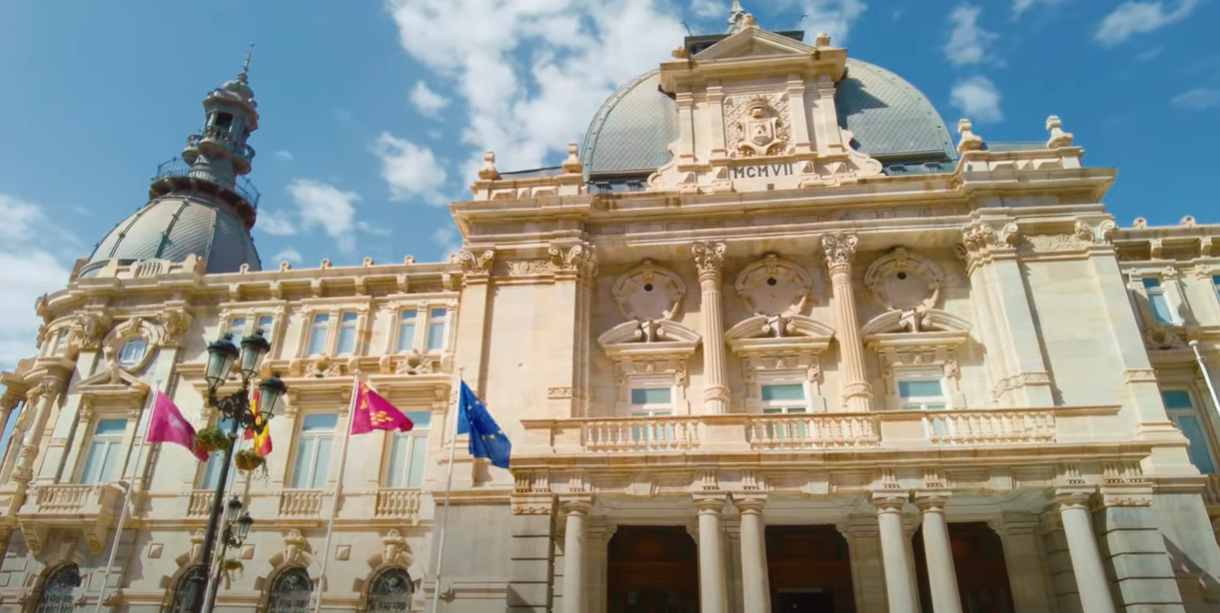
Cartagena’s architectural heritage extends well beyond its ancient ruins. The Old Town bursts with modernist and art nouveau buildings from the early 20th century, when the city experienced an economic boom fueled by mining wealth. The most spectacular example is the Palacio Consistorial (Town Hall), with its ornate white facade and decorative elements that seem almost too delicate to be real.
Equally impressive is the Gran Hotel, designed by Víctor Beltrí in 1916. This art nouveau masterpiece features intricate ironwork balconies, colorful ceramic decorations, and elaborate stonework. Nearby stands Casa Cervantes, another Beltrí creation, with its distinctive curved facade and elegant balconies.
For panoramic views of the Old Town and harbour, visitors can ascend to Concepción Castle, perched atop one of the city’s five hills. This medieval fortress, built on Roman foundations, offers the perfect vantage point to appreciate Cartagena’s strategic position and natural harbour—one of the finest in the Mediterranean.
Top Places to Visit in Old Town Cartagena
History lovers will be spoiled for choice in Cartagena’s Old Town. Here are three standout landmarks you simply can’t miss:
1. Roman Theatre Museum (Teatro Romano de Cartagena)
This 1st-century BC Roman theatre, only rediscovered in 1988, is one of the finest ancient monuments in Spain. It once seated over 6,000 people and remains impressively intact. A visit here includes a walk through a modern museum that contextualizes the Roman era and leads directly into the theatre itself.

The structure sits beside the ruins of a Roman market and bathhouse, offering a vivid glimpse of ancient urban life. The contrast between these ruins and the surrounding town is part of Cartagena’s unique charm.

2. Castillo de la Concepción (Concepción Castle)
Sitting atop one of Cartagena’s highest hills, Castillo de la Concepción offers not just history but some of the best panoramic views over the port and the city. This medieval castle was built on top of older Roman and Moorish foundations and is now accessible via a scenic glass elevator from the city center.
Inside, you’ll find exhibits on Cartagena’s military and civic history. Outside, the views of the harbour, amphitheatre, and naval base below are simply stunning.

3. Museo Refugio de la Guerra Civil (Civil War Shelters Museum)
This museum is housed in a network of underground bomb shelters used during the Spanish Civil War. Through immersive displays, it brings to life the harsh realities civilians faced during air raids and highlights Cartagena’s strategic importance during the conflict.

It’s a sobering but important part of the town’s story and adds another layer to the already deep historical narrative of the Old Town.

How to Get to Cartagena
Whether arriving by plane, train, or road, Old Town Cartagena Spain is well connected and easy to reach.
✈️ By Air
The closest airport is Región de Murcia International Airport (RMU), located about 35 km from Cartagena. It offers direct flights to several European cities, particularly in the UK and Northern Europe.
From the airport, you can take:
- Car rental – Offers the most flexibility, with direct access via the RM-16 and A-30 highways.
- Bus – Regional buses connect the airport to Cartagena, with transfer options at Murcia or La Unión.
- Taxi – A 30–40 minute drive directly into the Old Town.
Alicante-Elche Airport (ALC), about 100 km away, is another viable alternative with a wider range of international connections.
🚆 By Train
Cartagena’s RENFE train station is located just a 10–15 minute walk from the Old Town. There are regular services to:
- Murcia (45 minutes)
- Madrid (4–5 hours via Alvia)
- Valencia and other southeastern cities
The trains are clean and efficient, with air conditioning and comfortable seating.
🚗 By Road
Driving to Cartagena is simple thanks to the A-30 and AP-7 motorways. The AP-7 runs along the Mediterranean coast and connects Cartagena to nearby towns like Torrevieja, Murcia, and Almería.
Public parking garages such as Parking Subterráneo Plaza del Rey or Parking Centro Histórico offer convenient access to the Old Town.
Where to Stay in Old Town Cartagena
Whether you prefer a charming boutique hotel in a historic building or a modern apartment near the marina, Old Town Cartagena Spain has accommodations for every taste and budget.
🏨 Historic and Boutique Hotels
- NH Cartagena – Situated right beside the Roman Theatre and marina, this 4-star hotel combines modern design with unbeatable location.
- Sercotel Alfonso XIII – Just outside the Old Town, this elegant hotel offers comfort and classic style, ideal for business or leisure travelers.
- Loop INN Hostel – A great budget-friendly option with a rooftop terrace, gym, and clean, modern dorms and private rooms.
🛏️ Guesthouses and Apartments
- La Casa de las Flores – A cozy guesthouse with decorative touches and a homey atmosphere.
- Apartamentos Turísticos Teatro Romano – Self-catering apartments right by the Roman Theatre, ideal for longer stays or families.
Dining and Nightlife
Cartagena’s Old Town is a rising star in Spain’s culinary map, offering everything from traditional Murcian fare to contemporary fusion cuisine.
Local Dishes to Try:
- Caldero – A hearty rice and fish stew traditionally cooked in iron pots by fishermen.
- Asado de cordero – Roast lamb with herbs, often served in tapas portions.
- Marinera – A crispy breadstick with Russian salad and anchovy, a typical Murcian tapa.
Recommended Eateries:
- La Catedral – A fine-dining restaurant built over Roman ruins with glass floors and upscale Spanish cuisine.
- Bar Sol – Traditional tapas bar popular with locals, serving excellent seafood.
- El Barrio de San Roque – A lively area for casual dining and craft beer.
For drinks, head to Plaza del Rey or Calle Mayor, where you’ll find a mix of wine bars, open-air terraces, and cocktail spots.
Local Events and Festivals
If you can time your trip with one of Cartagena’s many festivals, you’ll get an even deeper taste of its identity:
Carthaginians and Romans Festival (Late September)
This week-long festival is one of Spain’s most elaborate historical reenactments. Locals dress as Carthaginian and Roman soldiers, staging battles, parades, and market scenes to recreate the city’s ancient founding. Some great market stalls to enjoy too.
Semana Santa (Holy Week)
Cartagena’s Easter processions are some of the most striking in Spain. The city’s military roots are evident in the regimented, silent processions that march through the Old Town in ornate robes.
La Mar de Músicas Festival (July)
A celebration of global music, this festival hosts artists from around the world in venues throughout the Old Town. It’s a lively time with street performances, art exhibits, and open-air concerts.
Insider Tips for Visiting Old Town Cartagena
- Start at the Tourist Office – Located in Plaza del Ayuntamiento, it provides maps and combined entry tickets for multiple attractions.
- Buy a Cartagena Puerto de Culturas Pass – A convenient way to access several museums and landmarks at a discounted rate.
- Timing – Visit archaeological sites early in the day to avoid crowds and midday heat.
- Footwear – Many streets are hilly or cobbled; good walking shoes are a must.

A Hidden Gem Worth Discovering
While Barcelona, Madrid, and Seville may draw more tourists, Cartagena’s Old Town offers something equally valuable—an authentic slice of Spanish history without the overwhelming crowds. Here, visitors can wander Roman ruins in the morning, admire art nouveau architecture in the afternoon, and dine on fresh seafood as the sun sets over the Mediterranean.
In Cartagena, history isn’t confined to museums—it surrounds you at every turn, creating an atmosphere that feels both timeless and vibrantly alive. For travelers seeking to experience the many layers of Spanish heritage in one captivating destination, Old Town Cartagena stands ready to reveal its treasures
Final Thoughts
If you’re the kind of traveler who enjoys peeling back layers of time, wandering through atmospheric streets, and stumbling across both ruins and real life, Old Town Cartagena Spain is the place for you. It’s compact enough to explore in a day, but rich enough in history and charm to hold your attention for much longer.
This isn’t just a city that’s preserved the past—it lives with it. You’ll see Roman walls next to Art Nouveau mansions, medieval castles overlooking naval academies, and locals sipping espresso near ancient columns. In Cartagena, history isn’t behind glass—it’s under your feet, around each corner, and still shaping the daily rhythm of life.
So, if you’re looking for a Spanish destination that blends depth with sunshine, history with hospitality, Old Town Cartagena Spain should be next on your itinerary.

If you like ancient history, then there are plenty Roman remains and relics to enjoy. For a more modern look at Spain, the Museo Refugio de la Guerra Civil (Civil War Shelters Museum) is an interesting, if not somber reminder of more recent times.

If you manage to see all that Old Town Cartagena Spain has to offer, go down to the promenade and take a boat trip out into the harbour and beyond.

We have done this a couple of times and loved the experience. Oh, it doesn’t cost a fortune either!


