Table of Contents
Spain’s Traffic Light Laws Are Changing In Just Over A Months Time
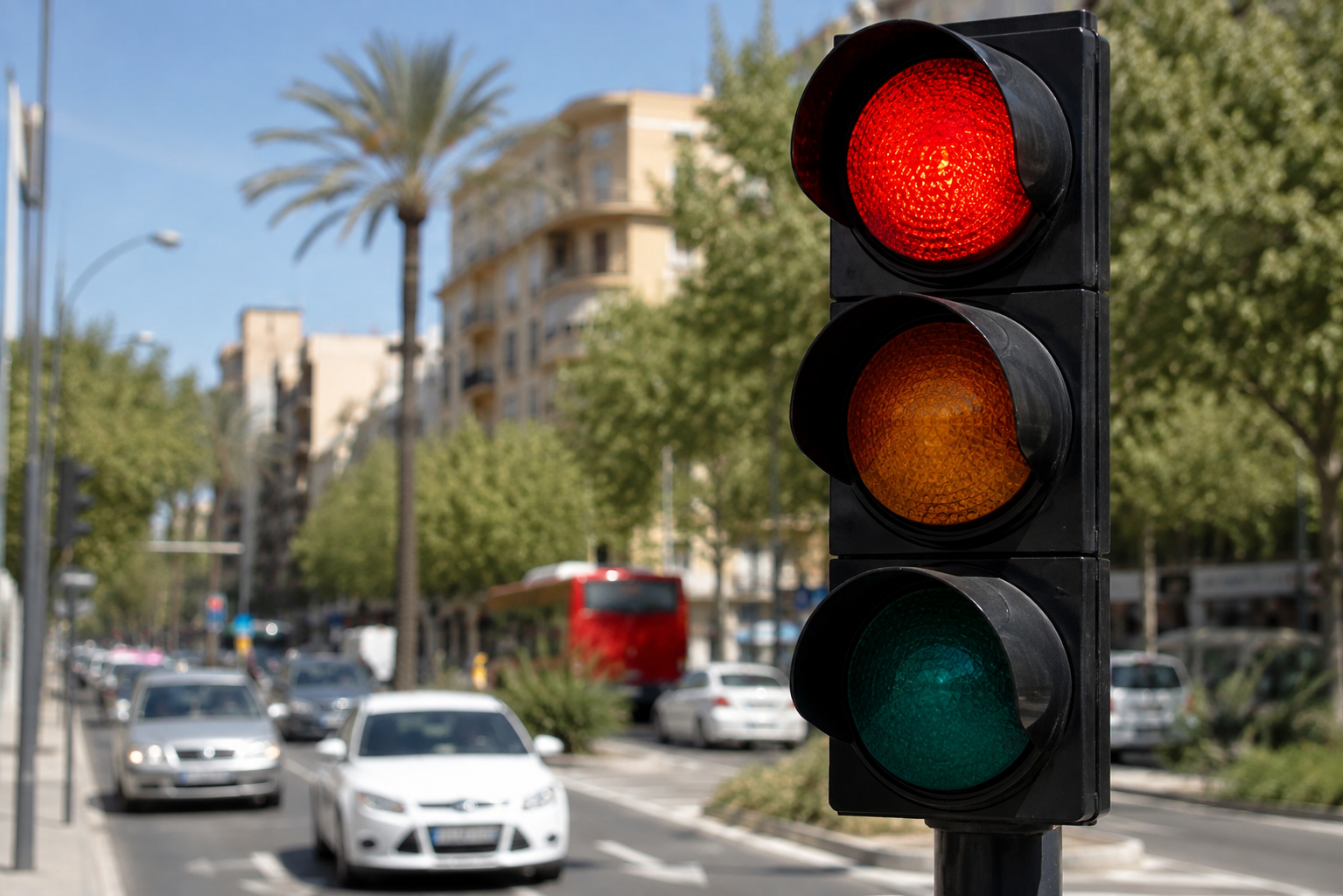
If you drive, cycle, or simply cross the road in Spain, a change is coming this autumn that’s worth knowing about before it lands. From 1 October 2026, the Spanish Traffic Authority (DGT — Dirección General de Tráfico) is altering how traffic lights operate at pedestrian crossings across the country. It’s a small technical tweak on paper, but it closes a genuine safety gap that’s existed in Spanish traffic law for years.
Here’s exactly what’s changing, why the DGT decided to act now, and what else is landing alongside it.
The Problem With the Old System
To understand the change, it helps to understand what it’s replacing.
Under the current rules, drivers approaching certain pedestrian crossings can be shown a flashing amber light. In Spanish traffic law, flashing amber has always meant “proceed with caution, give way to pedestrians” — not a full stop, but not a green light either. It sits in a legal grey area, allowing careful movement rather than demanding a complete halt.
The trouble is that this flashing amber sequence has, at many crossings, been allowed to run at exactly the same time as pedestrians receive a steady green “walk” signal. On paper, that’s not necessarily unsafe — drivers are supposed to yield. In practice, it’s created a genuinely dangerous overlap. Pedestrians stepping out on their green light naturally assume the crossing is theirs, with no need to check for approaching traffic. Meanwhile, some drivers read the flashing amber as an invitation to keep rolling through at reduced speed, rather than stopping outright. Two road users, looking at two different signals, drawing two different conclusions about who has priority — at the exact same moment, on the exact same crossing.
That ambiguity is precisely what the DGT is now eliminating, with their Spain’s traffic light laws updates.
What Changes From October 1, 2026
Under the reformed General Traffic Regulations, a flashing amber light for vehicles can no longer be displayed at the same time as a steady green signal for pedestrians at the same crossing.
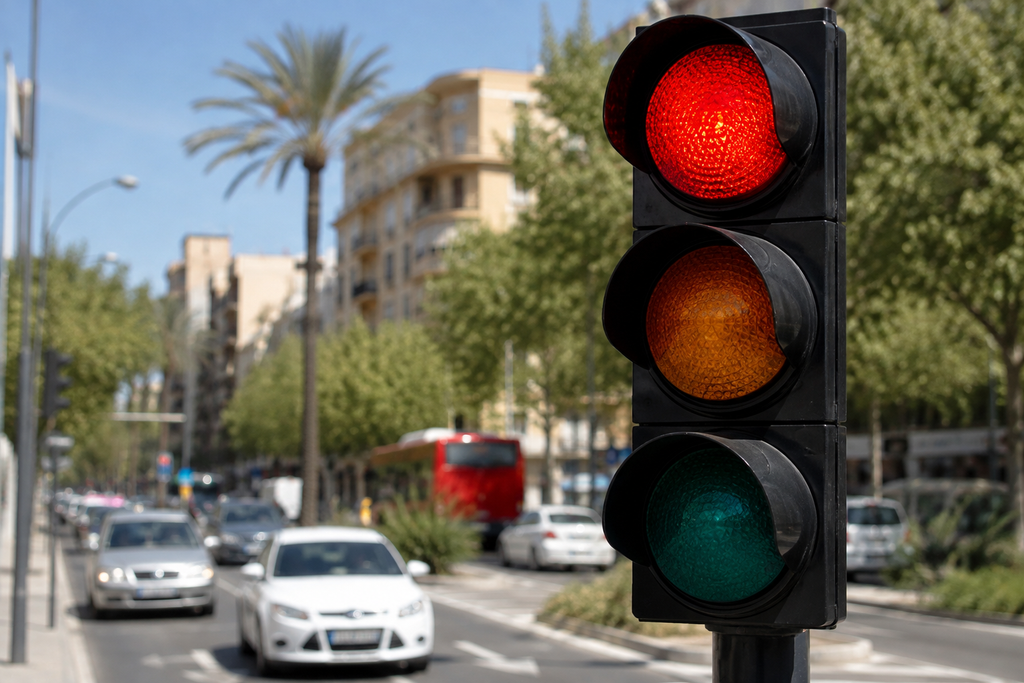
In practical terms: when pedestrians get their green “walk” light, drivers will now see a solid red. Full stop, no exceptions, no cautious creeping through. The overlapping signal that used to let drivers proceed “carefully” while people were actively crossing has simply been removed from the sequence. Local councils and traffic authorities are responsible for reprogramming the physical timing of their traffic lights to comply, so the visible change will roll out crossing by crossing over the weeks around the deadline, rather than switching everywhere at once overnight.
Why the DGT Made This Call
The reasoning behind the change is straightforward: reducing accidents involving pedestrians, and particularly the most vulnerable groups on Spain’s roads — children, older pedestrians, and people with reduced mobility, all of whom are less able to react quickly if a driver misjudges a flashing amber signal.
This isn’t a decision made on a whim, either. The DGT’s own traffic safety magazine flagged this exact issue back in 2022, pointing to research carried out in the UK by the Safer Roads Foundation. That research demonstrated that flashing amber sequences running alongside pedestrian green lights created a measurable accident risk, and it was influential enough to get the equivalent rule changed in the UK’s own traffic regulations. Spain’s reform follows that same logic, backed by several years of accident data and safety review before the change was finally approved.
Part of a Wider Package of Reforms
The traffic light change isn’t happening in isolation. It’s one piece of a broader update to Spain’s General Traffic Regulations, all taking effect on the same October 2026 date, aimed squarely at protecting pedestrians and cyclists as Spanish towns and cities have become considerably busier with foot traffic, bicycles, e-bikes, and electric scooters over the past decade.
Alongside the new Spain’s traffic light laws rule, drivers will also need to adjust to:
- Stricter cyclist overtaking rules — a mandatory speed reduction of at least 20 km/h below the posted limit when passing a cyclist, a full lane change required on multi-lane roads (rather than just partially moving over), and a minimum lateral gap of 1.5 metres maintained throughout the manoeuvre.
- A brand-new section within the traffic regulations specifically covering urban driving, reflecting how differently city streets function compared to open roads.
- Two delayed provisions, held back until October 2027 to give manufacturers and retailers time to adapt: mandatory built-in lighting on personal mobility vehicles such as e-scooters, and a requirement for moped riders to wear fully approved helmets rather than simply certified ones.
What It Means for Drivers and Pedestrians
For anyone driving in Spain, the takeaway is simple and worth remembering: don’t expect a flashing amber light to mean you can inch through a crossing while pedestrians are actively walking across it. If pedestrians have a green light, you’ll now have a red — with no ambiguous middle ground in between.
For pedestrians, the change should, in theory, make crossings noticeably safer and less confusing, closing a gap that’s existed in the system for a long time. As with any regulatory change, though, it will take a little while for the new sequencing to become second nature to everyone on the road — so a bit of extra caution at unfamiliar crossings in the months following the rollout is well worth keeping in mind, whichever side of the crossing you happen to be on.
Keep coming back to the site here, as we’ll be updating on other changes in the law that come into play in October 2026.
Important: I am not a lawyer, accountant, tax adviser, immigration specialist or visa adviser. The information provided in this article is for general information purposes only and should not be considered legal, financial, tax or immigration advice. Rules, regulations and individual circumstances can change, and what applies to one person may not apply to another. If you are unsure about anything discussed here, please seek advice from a suitably qualified professional or specialist before making any decisions.