Table of Contents
What is Velolaser Speed Radar Technology
Right, let me tell you about the Velolaser speed radar – and trust me, I’ve got personal experience with this sneaky little device after getting nicked by one just last week on the CV-905 near Torrevieja. These portable speed radar units are revolutionising how the DGT (Dirección General de Tráfico) catches speeders across Spain, and they’re bloody effective at it.
When the post delivery knocked on the door the other week, I wondered if it was a late birthday card, as it is very rare, I get letters. Alas, I was asked for my TIE and had to sign for this letter, which was from the DGT.
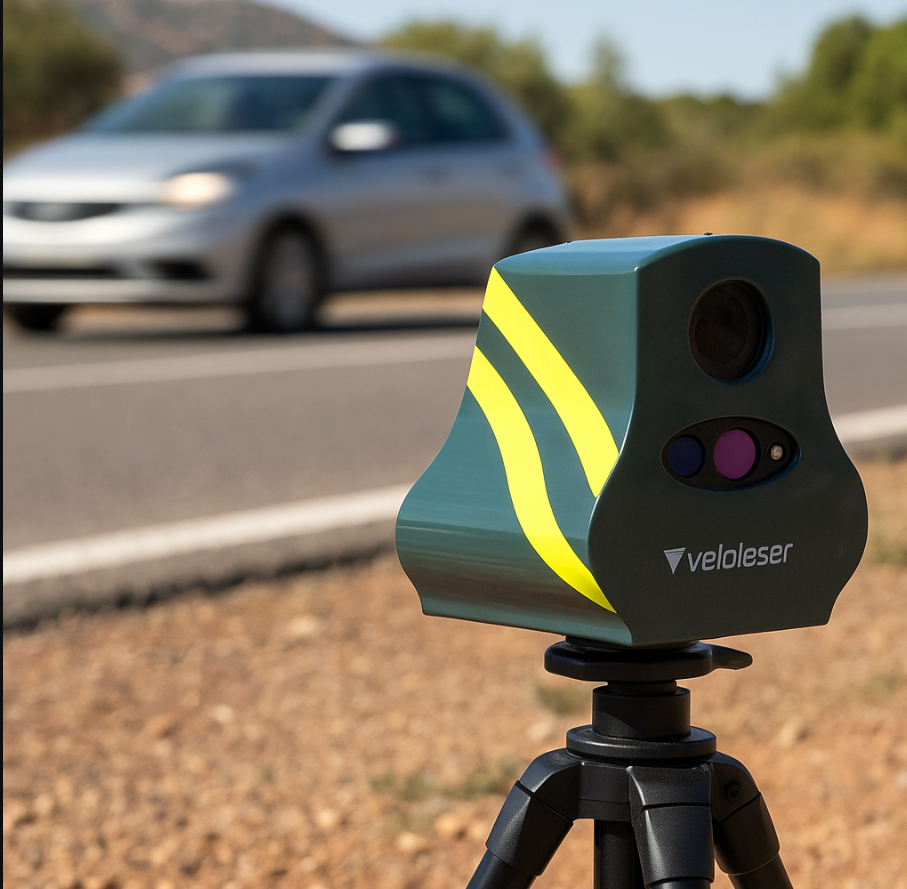
The Velolaser speed radar represents the latest generation of traffic enforcement technology deployed on Spanish roads. Unlike the traditional fixed speed cameras you’ll spot mounted on gantries or the bulky mobile radar units that require a patrol car, these compact laser-based systems are designed to be virtually invisible until it’s too late. They’re small, portable, and can be positioned almost anywhere – which is exactly why I didn’t see the one that caught me doing 78 km/h in a 50 zone.
What makes Velolaser technology particularly significant in modern traffic enforcement is its combination of advanced laser detection capabilities with extreme portability. The DGT has invested heavily in these systems specifically because they can be deployed rapidly in accident blackspots, school zones, and areas where speeding has become problematic. The psychological impact is considerable too – drivers never know where these units might be lurking, which theoretically encourages better speed compliance across the board.
The portable speed radar market has evolved considerably over the past decade, but Velolaser represents a quantum leap in terms of discretion and effectiveness. Traditional radar detectors that drivers use to spot enforcement zones have a much harder time picking up these laser-based systems, making them particularly effective at catching habitual speeders who’ve become complacent with conventional radar technology.
Technical Specifications and Features of Velolaser Radars
Let’s dig into what makes these devices so effective – and so difficult to spot until you see the flash in your rearview mirror.
Physical Dimensions and Portability (50cm Height, 2kg Weight)
The Velolaser speed radar is remarkably compact, standing just 50 centimetres tall – about the height of a large water bottle. At only 2 kilograms, a traffic officer can easily carry several units and deploy them quickly at different locations throughout a shift. This is a game-changer compared to the older mobile radar systems that required significant setup time and were far more conspicuous.
The compact design means these units can be concealed behind road furniture, positioned on narrow bridge parapets, or even held by officers on foot patrol. I’ve seen them tucked behind rubbish bins, positioned in roadside vegetation, and mounted on motorway bridge railings where they’re virtually impossible to spot at driving speeds. The lightweight construction also means officers can reposition units quickly if they’re not catching enough violations in one location – they simply pack up and move 500 metres down the road.

Speed Detection Range (15-250 km/h Capability)
The Velolaser’s detection range covers speeds from 15 km/h right up to 250 km/h, making it effective in virtually any traffic environment imaginable. Whether you’re crawling through a residential zone or hammering down the AP-7 motorway, this device can accurately measure your speed.
The lower threshold of 15 km/h means these radars are perfectly suited for enforcement in pedestrian zones, school areas, and narrow village streets where speed limits might be 20 or 30 km/h. At the upper end, the 250 km/h capability covers even the fastest legal speeds on Spanish motorways (120 km/h) with plenty of headroom for detecting serious speeders who might be doing double the limit.
This wide operational range gives the DGT tremendous flexibility in deployment. The same unit that clocks cars in a 30 km/h village zone at lunchtime can be repositioned to a motorway slip road by evening rush hour without any reconfiguration needed.
Detection Distance (15-50 Meters Range)
The effective detection range of 15 to 50 metres gives officers the perfect sweet spot for enforcement. At 15 metres, the laser beam is narrow and highly accurate, making it impossible for drivers to claim the radar caught a different vehicle. At 50 metres, officers have enough distance to safely capture evidence and identify the vehicle before it passes their position.
This operational range also makes the Velolaser speed radar ideal for use in varied terrain. On narrow secondary roads with limited visibility, officers can position themselves closer to oncoming traffic. On wider highways with longer sight lines, they can work from further back, making the setup even harder to spot until drivers are well within the detection zone.
The laser technology employed by Velolaser allows for precise targeting of individual vehicles even in dense traffic conditions. Unlike traditional doppler radar that can sometimes struggle to identify which specific vehicle triggered a speed reading in multi-lane scenarios, the laser beam’s narrow focus eliminates ambiguity.
Battery Life and Autonomous Operation (5-Hour Runtime)
One of the most impressive features of the Velolaser speed radar system is its five-hour battery life, allowing completely autonomous operation without the need for a power supply. This means officers can position these units in remote locations without access to mains electricity or even a patrol vehicle.
The five-hour runtime is sufficient for an entire morning or afternoon enforcement shift. In practical terms, an officer can deploy a Velolaser unit at 7:00 AM to catch morning commuters, monitor it remotely throughout the morning, and retrieve it at noon – all without worrying about battery depletion. The wireless connectivity features mean the officer doesn’t even need to remain at the deployment site, allowing them to monitor multiple locations simultaneously.
The portable speed radar’s battery system is designed for rapid charging, and many DGT traffic units carry multiple battery packs, allowing them to swap out depleted batteries and maintain continuous enforcement coverage throughout extended operations. This autonomous capability has fundamentally changed how traffic enforcement operates in Spain, enabling persistent monitoring of problematic areas that were previously difficult to police effectively.
Discover unforgettable experiences with Viator — from city tours and cultural excursions to wine tastings and scenic boat trips worldwide.For walking tours, bus tours, wine tasting, sunset boat trips and much more, check out Viator
How Velolaser Speed Radar Technology Works
Understanding how these devices actually measure your speed helps explain why they’re so accurate – and so difficult to contest in court.
Laser-Based Doppler Effect Measurement
The Velolaser system uses laser technology combined with doppler effect principles to calculate vehicle speeds with extraordinary precision. Unlike traditional radar that broadcasts radio waves across a wide area, laser-based speed detection uses a tightly focused beam of light, making measurements far more accurate and vehicle-specific.
Infrared Laser Pulse Technology
The Velolaser speed radar emits infrared laser pulses that are invisible to the human eye. These pulses travel at the speed of light and reflect off the surface of target vehicles. The laser wavelength used is specifically chosen because it reflects well off vehicle bodywork and number plates while being unaffected by most weather conditions.
The infrared laser operates in rapid bursts, sending out hundreds of pulses per second. Each pulse travels to the target vehicle and bounces back to the Velolaser’s receiver. The system’s processor analyses these returning pulses with incredible precision, measuring the time taken for each pulse to complete its round trip.
Because the laser beam has a very narrow divergence angle (typically less than 3 milliradians), it remains focused on a specific vehicle even at the maximum 50-metre detection range. This narrow beam is precisely why you can’t argue that the radar caught someone else’s speed when you were the one speeding – the laser literally targeted your vehicle specifically.
Speed Calculation Through Distance-Time Analysis
The Velolaser calculates speed by measuring how the distance to the target vehicle changes over time. By sending multiple laser pulses in rapid succession and precisely measuring how long each pulse takes to return, the system can determine whether the vehicle is moving toward or away from the radar and at what rate.
This distance-time analysis is fundamental physics: if the laser pulse takes progressively less time to return to the receiver, the vehicle is approaching the radar. By calculating the rate of distance change, the processor determines the vehicle’s speed. Multiple measurements are taken within fractions of a second and averaged to provide an extremely accurate final speed reading.
The beauty of this laser-based approach is its precision. Traditional doppler radar measures frequency shifts in reflected radio waves, which can be affected by vehicle size, shape, and reflectivity. Laser distance-time measurement is far less susceptible to these variables, producing reliable readings regardless of whether you’re driving a tiny Fiat 500 or a massive Mercedes Sprinter van.
Wireless Connectivity and Remote Control
This is where Velolaser technology gets properly sophisticated – and rather Orwellian if I’m honest.
WiFi and 4G/3G Data Transmission
The Velolaser speed radar units are equipped with both WiFi and cellular data connectivity (4G/3G networks), enabling real-time communication between the radar and traffic enforcement officers. This wireless capability means an officer can deploy a radar unit and monitor it from a patrol car parked several hundred metres away – or even from a completely different location.
When the radar detects a speeding vehicle, it immediately transmits the violation data, including speed reading, timestamp, and photographic evidence, to the officer’s control tablet or laptop. This remote transmission capability allows a single officer to monitor multiple radar locations simultaneously, dramatically increasing enforcement efficiency.
The cellular connectivity also means these portable speed radar systems can be deployed in locations where WiFi isn’t available. Whether positioned on a remote mountain pass or a rural secondary road, as long as there’s mobile phone coverage, the Velolaser can communicate with enforcement officers.
Real-Time Monitoring Capabilities
The real-time monitoring features of Velolaser systems allow officers to observe traffic patterns, adjust detection parameters, and respond to violations as they occur. The officer’s control interface displays live speed readings, traffic density, and violation alerts, giving them complete situational awareness without being physically present at the radar location.
This remote capability has strategic advantages beyond just officer convenience. By monitoring from a concealed position, officers can coordinate with mobile patrol units to intercept serious speeders further down the road, conduct more thorough vehicle inspections, and ensure violators are safely pulled over rather than attempting to stop vehicles immediately adjacent to the radar location.
The wireless connectivity also facilitates data analysis and reporting. All speed measurements, violation records, and photographic evidence are automatically uploaded to central DGT databases, creating comprehensive records of traffic patterns and enforcement activities that inform future deployment strategies.
DGT Implementation and Deployment Strategy
The Spanish traffic authority hasn’t just bought a handful of these devices – they’ve invested seriously in rolling out Velolaser technology across the country.