The Barcelona, or to shorten it to Bcn to Valencia train offers that rarest of travel experiences—a journey that’s actually more pleasant than the destinations it connects, which is saying something when we’re talking about two of Spain’s most captivating Mediterranean cities. While back home we’re celebrating if a train arrives within the same calendar day as promised, Spain’s sleek Euromed services glide along the coast with such punctuality that you could set your Rolex by them (assuming you haven’t had to pawn it to afford British rail tickets).
My first experience with this particular route came after a week in Barcelona, where I’d consumed enough cava and patatas bravas to warrant a change of scenery—and possibly a larger clothes size. As the train pulled out of Barcelona Sants station and the Mediterranean appeared on our right, sparkling like a celebrity’s dental work, I realized this journey along Spain’s stunning coastline might be the highlight of my trip rather than merely the means to reach my next destination.
Whether you’re fleeing Barcelona’s tourist crowds for Valencia’s more manageable charms, or you’re on a mission to compare which city makes the superior paella (a debate I’m not brave enough to wade into without body armor), this guide will help you navigate the rail connection between Catalonia’s proud capital and the city that brought us paella, horchata, and the architectural wonders of Santiago Calatrava—all without the need to brave Spanish motorways or endure the unique humiliation of budget airline travel.
Tickets For The Barcelona to Valencia Train: Classes, Confusion, and Curious Pricing
Purchasing tickets for the Barcelona to Valencia train initially appears more straightforward than understanding the offside rule or assembling flat-pack furniture without marital discord—until you actually attempt it, at which point it transforms into an exercise in patience, perseverance, and occasionally profanity.
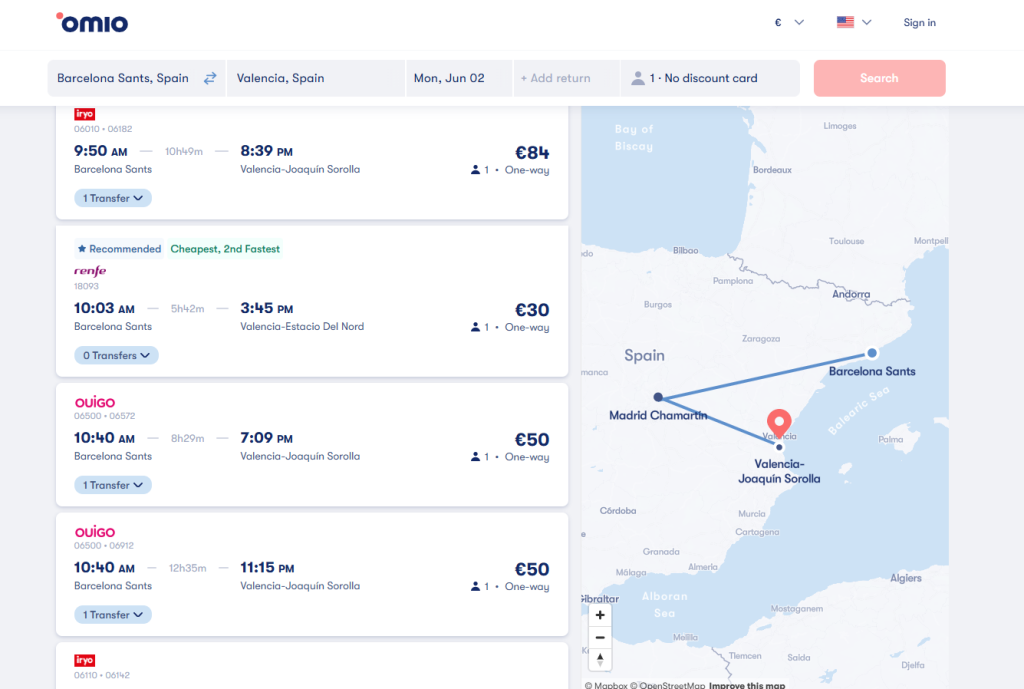
Renfe, Spain’s national rail operator, offers services on this route via two main train types: the high-speed Euromed trains that hug the picturesque coastline, and the even faster AVE services that take an inland route through Tarragona. Three ticket classes await the discerning traveler, each with its own peculiar combination of perks and prices.
Plan your travel easily with Omio — compare and book trains, buses, and ferries across Spain with one simple platform.For Train, Bus & Ferry Tickets In Spain Check Out Omio
Básico (Standard Class) is the no-frills option that most of us penny-pinching Brits inevitably select. It offers a perfectly comfortable seat and the same speed of travel as the pricier options, just without the added extras that you’ll spend the journey wondering if you should have paid for. Tickets start from a very reasonable €18 when booked well in advance (about 60-90 days before travel), but can rocket up to €45 or more if you’re the spontaneous type who decides to travel tomorrow. At peak times and holidays, even these fares can reach eye-watering heights that might have you considering a career change to fund your Spanish adventures.
Elige Comfort is the middle ground for those who want a bit more space without feeling the guilt of full first-class indulgence. You’ll get a slightly wider seat, power sockets guaranteed at every position (rather than the Hunger Games-style competition for them in standard class), and access to the Sala Club lounges in both Barcelona Sants and Valencia Joaquín Sorolla stations. Prices typically range from €28 to €60 depending on how far ahead you’ve planned your life. The lounge access alone can be worth the upgrade if you arrive early, if only for the free coffee and the smug feeling of exclusivity as you gaze down upon the café-purchasing masses.
Elige Premium (First Class) offers the full Spanish rail experience—wider seats arranged in a 2-1 configuration (solo travelers: aim for the single seats for maximum antisocial bliss), meal service included, unlimited drinks, lounge access, and the pleasure of boarding first so you can settle in and watch standard class passengers struggle with oversized luggage. Expect to pay €45-90 for this privilege. During my own Premium experience, I was served a three-course meal that wouldn’t have been out of place in a decent restaurant, all while watching the Mediterranean coast slide by—a far cry from the curling sandwich and tepid tea that passes for luxury on British rail services.
A quirk worth noting is that booking directly through Renfe’s website often feels like trying to decode the Da Vinci Code while simultaneously being mildly electrocuted. The English translation appears to have been done by someone whose primary experience of English was watching half an episode of Downton Abbey. After three attempts to book a ticket resulted in cryptic error messages, I discovered that third-party sites like Trainline offer a more user-friendly experience for a small fee—a price I’d gladly pay twice for the preservation of my sanity and blood pressure.
Security on these services is also something British travelers might find unusual. Unlike our “hop on and hope” approach, Spanish high-speed trains require passengers to pass their luggage through X-ray machines and tickets through barriers before boarding. It’s not quite airport-level security (you can keep your shoes on and bring liquids aboard without storing them in tiny bottles), but do arrive at least 15-20 minutes before departure to complete these formalities without having to channel your inner Usain Bolt.
How Long Is The Barcelona to Valencia Train Journey: Coastal Bliss in Record Time
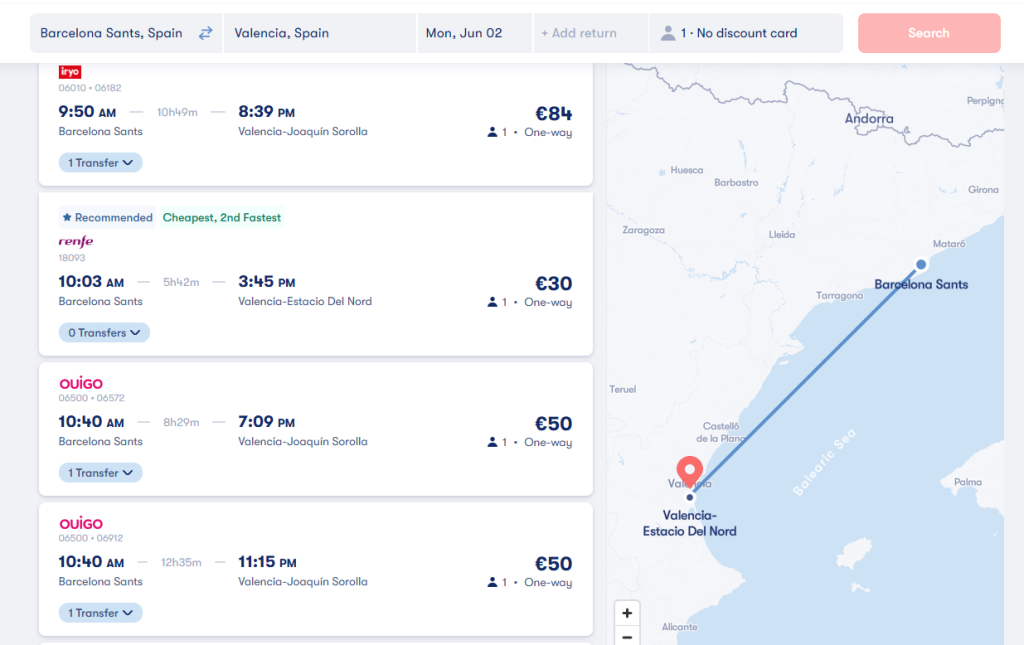
The Barcelona to Valencia train journey covers approximately 350km in a remarkably civilized 2 hours and 40 minutes on the fastest Euromed services—roughly the same time it takes to get from London to Bath on a good day, a journey less than half the distance. The AVE trains that take the inland route can shave this down to about 2 hours 20 minutes, at the cost of missing the coastal scenery.
The route from Barcelona Sants stations follows the Mediterranean coastline through Catalonia and into the Valencia region, offering the kind of sea views that make you want to immediately list your rainy British semi-detached on Rightmove and relocate permanently. The main intermediate stops include Tarragona—home to impressive Roman ruins that make our Roman baths look like a hastily assembled film set—and Castellón de la Plana, before arriving at Valencia’s Joaquín Sorolla station.
What makes this journey particularly special is that for significant stretches, the tracks run right alongside the Mediterranean. While British rail journeys might occasionally offer views of industrial estates, neglected back gardens, or if you’re particularly fortunate, some sheep, this route delivers a nearly continuous backdrop of azure waters, sandy beaches, and picturesque coastal towns. It’s enough to make you temporarily forget the exorbitant cost of a moderately drinkable gin and tonic back home.
Had you opted to drive, you’d be looking at 3.5-4 hours on toll roads that would dent both your wallet and your will to live. Flying seems quicker on paper at just 1 hour in the air, but once you factor in getting to Barcelona’s El Prat airport (a good 30-45 minutes from the center), security queues that make Thorpe Park on a Bank Holiday seem efficiently managed, and the taxi from Valencia airport, the train wins by a country kilometer.
During my journey one balmy October afternoon, I watched as the train’s digital display showed 200 km/h while the air conditioning maintained a perfect temperature that made me temporarily forget my British programming to complain about the weather at every opportunity. The coastal landscape unfurled like a particularly beautiful screensaver, and I found myself ignoring my Kindle in favor of simply gazing out the window—a rare occurrence for someone who usually treats train journeys as enforced reading time.
Travel smoothly across Spain and beyond with Rail Europe — your go-to platform for booking train tickets quickly and easily.For train tickets in Spain check out Rail Europe
Fastest Options
The Euromed high-speed trains, operated by Renfe, are the quickest, completing the journey in approximately 2 hours and 35 minutes. These trains run along the Mediterranean corridor and offer modern amenities such as Wi-Fi, power outlets, and onboard dining
Barcelona to Valencia Train Schedule: Frequency That Makes British Rail Look Prehistoric
The Barcelona to Valencia train schedule offers a frequency that would make Network Rail executives spill their overpriced coffees in shock. Services begin around 6:00 am and continue until approximately 9:00 pm, with departures roughly every hour throughout the day and even more frequent options during morning and evening peak times.
On weekdays, travelers can typically choose from about 15-18 daily trains, while weekends see a slightly reduced service of 12-15 trains. This means that missing your train is a minor inconvenience rather than a holiday-destroying catastrophe necessitating emergency hotel bookings and tearful phone calls to rearrange dinner reservations.
The sweet spot for comfortable travel is mid-morning (around 10-11 am) when business travelers have already reached their destinations and tourists are still lingering over their hotel breakfast buffets, attempting to extract maximum value by consuming their body weight in iberico ham and pastries. The early afternoon trains (2-4 pm) tend to be quieter as they conflict with Spain’s sacred lunch hour—a time when many Spaniards would sooner miss their own child’s wedding than their three-course menu del día.
Weekend services get noticeably busier, particularly Sunday evenings when weekend breakers head back to reality. Friday afternoons are similarly hectic as Barcelona residents make their escape to weekend homes along the Valencia coast. During summer months (July-August) and major holidays like Easter week, trains book up weeks in advance, and you’ll have more chance of finding a straight banana in Waitrose than securing a last-minute seat.
The punctuality statistics for these services would make British rail operators choke on their regulation-issue excuses. Renfe is so confident in their timekeeping that they offer a money-back guarantee if your train arrives more than 15 minutes late—a concept so alien to British rail users that we might assume it’s some sort of elaborate practical joke. In four journeys on this route, I’ve never experienced a delay longer than five minutes, which makes one wonder if perhaps we could swap notes with our Spanish counterparts, or at the very least, borrow their watches.
Barcelona Sants Station: Functionality Over Charm
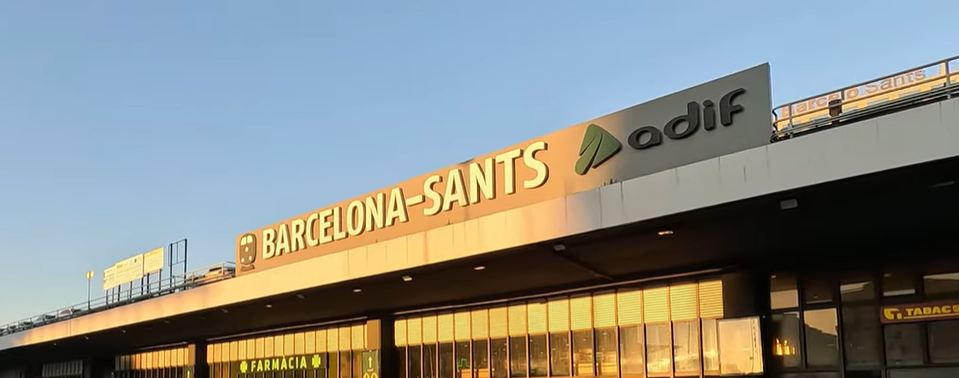
Barcelona Sants station is to beautiful railway terminals what a Pot Noodle is to fine dining—it gets the job done with minimal fuss but leaves you vaguely wishing for something more inspiring. Located about 2km west of the city center, this concrete monolith prioritizes efficiency over aesthetics, which is rather un-Spanish but certainly convenient for travelers.
The station sits like a giant Brutalist birthday cake in the middle of the Sants neighborhood, connected to nearly every corner of Barcelona via the city’s comprehensive Metro system (Lines 3 and 5 stop here). City buses stop directly outside, and a taxi from most central Barcelona locations will set you back €10-15 depending on traffic and how much your driver wants to practice their English by pointing out landmarks you’ve already visited.
For those arriving from Barcelona Airport, the R2 Nord train offers a direct connection to Sants in about 20 minutes—infinitely preferable to tackling the Metro with luggage, an experience that falls somewhere between an obstacle course and a contact sport depending on the time of day.
Inside, Sants is spread across two main levels. The ground floor houses shops, cafés, and ticket offices, while the upper level contains the platforms. Security checks for high-speed services are located near the platform entrances and can build queues during peak times, so factor in at least 20 minutes before departure—a concept that may require mental adjustment for British travelers accustomed to treating scheduled departure times as loose suggestions.
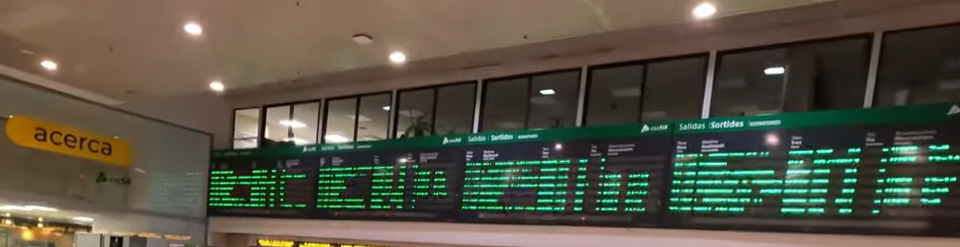
The station offers the standard amenities: left luggage facilities (about €5 per day for a standard suitcase), shops selling everything from emergency phone chargers to jamón ibérico at prices that suggest they’re made from gold-fed pigs, and several cafés where you can experience the unique joy of paying €4 for a coffee that would cost €1.50 anywhere else in the city.
My personal recommendation is to skip the station’s overpriced food offerings and instead grab something from the excellent Forn Baltá bakery just outside the station on Plaça dels Països Catalans. Their ensaïmadas (spiral-shaped pastries) are worth missing your train for—though I don’t recommend testing this theory literally.
Valencia Joaquín Sorolla Station: The Temporary Solution That Became Permanent
Valencia’s Joaquín Sorolla station is the railway equivalent of a pop-up shop that forgot to pop down. Built as a “temporary” terminal for high-speed services in 2010, it has that distinct air of provisional permanence that suggests Spanish rail planners and British people doing home renovations may share some DNA.
Located about 800 meters southwest of Valencia’s main Nord station (an actually beautiful Modernista building that high-speed trains inexplicably don’t use), Joaquín Sorolla is functional, modern, and entirely forgettable—the rail station equivalent of a sensible haircut.
The station sits approximately 2km from Valencia’s historic center, making it just far enough to be annoying but close enough that most visitors with moderate fitness and minimal luggage can walk it in about 25 minutes. This walk takes you through unremarkable residential areas before the architectural wonders of Valencia’s old town appear—rather like having to eat your vegetables before getting dessert.
Public transport connections include bus routes 13 and 14, which stop directly outside, and the metro is about a 10-minute walk away at Bailén station (lines 3, 5, and 9). A free shuttle bus runs every 10-15 minutes between Joaquín Sorolla and the more central Nord station, which is handy if you’re connecting to regional services or simply prefer your train stations with a bit more architectural character.
Taxis are plentiful and relatively inexpensive, with fares to the Cathedral area or the spectacular City of Arts and Sciences costing around €8-12. For the budget-conscious, Valencia’s excellent Valenbisi bike sharing system has a station nearby, offering the chance to begin your Valencia experience with an impromptu cycling adventure—though I’d only recommend this to those traveling with minimal luggage and maximal confidence in their urban cycling abilities.
Inside, Joaquín Sorolla offers the basics without flourish: a few shops, a café with surprisingly decent sandwiches, ticket offices, and the obligatory WHSmith-equivalent selling books and magazines at prices that suggest they’ve been imported page by page via personal courier. The Sala Club lounge for premium ticket holders is compact but offers comfortable seating, complimentary drinks and snacks, and most importantly, escape from the main concourse.
Upon arrival, resist the temptation to immediately flee this temple of beige and instead take a moment to orient yourself and perhaps grab a horchata (Valencia’s signature tiger nut drink) from the café. It’s refreshingly sweet, thoroughly Valencian, and will give you the energy needed to tackle the walk to your accommodation or the next leg of your journey.
On-Board Experience: Mediterranean Views With First-World Amenities
The on-board experience of the Barcelona to Valencia train resembles what we’re promised in UK rail commercials but never quite experience—clean, spacious carriages where things actually work and fellow passengers don’t treat armrests as territories to be conquered and defended with passive-aggressive sighing.
Standard class seats are arranged in a 2-2 configuration and offer legroom that would make economy airline passengers weep with joy. Each seat comes with a fold-down table that can actually accommodate a laptop without requiring advanced origami skills, a personal reading light, and access to power sockets (though these are sometimes shared between seats, leading to silent battles of charging priority).
Comfort class offers slightly wider seats with guaranteed power sockets and complimentary headphones for the entertainment system, which typically shows Spanish films or programs that serve primarily to make you regret not paying more attention in GCSE Spanish. Premium class provides wider seats in a 2-1 configuration, meal service, and unlimited drinks—the closest you’ll get to flying business class while remaining firmly on the ground.
The café car (or “cafetería”) offers a selection of sandwiches, snacks, and drinks at prices that, while not exactly bargains, won’t require you to remortgage your home. A decent coffee and sandwich combo will set you back about €7-8. The quality surpasses what you’d find on British trains, though that’s admittedly clearing a bar so low it’s practically subterranean.
Premium passengers receive a complimentary meal that typically includes a starter, main course, dessert, bread, and beverages. During my journey, this consisted of a surprisingly tasty seafood salad, chicken with roasted vegetables, a chocolate dessert, and unlimited wine—which explained the gentleman across the aisle taking a post-lunch siesta that produced snores competitive with a small chainsaw.
Baggage allowances are refreshingly generous, with no formal weight limit. Each passenger can bring three items on board: typically one large suitcase, which can be stored in the racks at the ends of carriages, and two smaller items for overhead storage. The overhead racks are notably more spacious than their British counterparts, where anything larger than a paperback book requires advanced Tetris skills to stow.
WiFi is available on most Euromed trains but requires registration and can be patchy, particularly along coastal stretches where the signal apparently prefers taking a seaside holiday to performing its designated function. Download entertainment before your journey if staying connected is important to you.
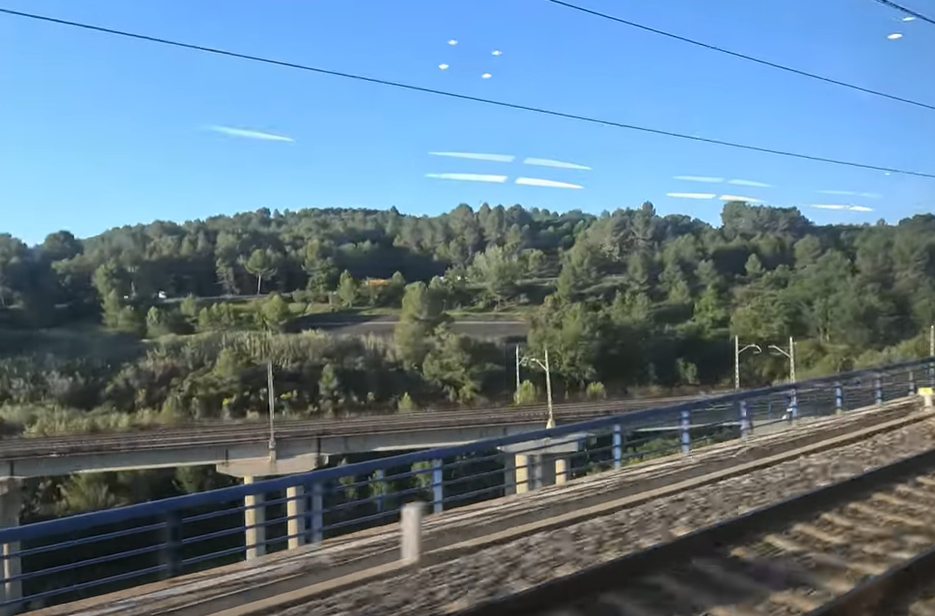
Perhaps the greatest luxury of all is the view. For much of the journey between Barcelona and Valencia, the Mediterranean is your constant companion to the east, a shimmering blue presence occasionally interrupted by charming coastal towns, marinas filled with boats you’ll never afford, and beaches that make Britain’s pebbly offerings look like poorly maintained construction sites.
During my journey, I watched as an elderly Spanish couple across the aisle ignored the stunning coastal scenery entirely, instead focusing intently on a plastic container of homemade tortilla they were sharing with the ceremony of wine connoisseurs at a tasting. They meticulously cut small pieces, offered them to each other, and debated what appeared to be the merits of the potato-to-egg ratio with an intensity that suggested this was no ordinary omelet. It was a moment of such genuine Spanish appreciation for food that it almost made me ashamed of the sad Pret sandwich I was simultaneously inhaling with considerably less ceremony.
The Verdict: A Journey That Rivals the Destinations
The Barcelona to Valencia train journey represents what rail travel should be—efficient, comfortable, reasonably priced, and with views that make you temporarily forget the existence of social media. For a journey connecting two of Spain’s most vibrant cities, it feels less like a necessary evil of travel and more like an integral part of the experience.
At its most affordable—a discounted Básico ticket booked well in advance—it’s remarkable value at around €18 each way. Even at standard rates of €30-45, it compares favorably with the cost of driving (factoring in fuel, tolls, and the psychological damage of navigating Spanish motorways) or flying when you account for airport transfers and the special joy of queuing in various formations that air travel entails.
The journey itself becomes a highlight rather than a mere interlude between destinations. The comfortable seats, civilized atmosphere, and genuinely spectacular coastal scenery make the 2 hours and 40 minutes pass with alarming speed. I’ve found myself almost disappointed to arrive in Valencia, which, given the city’s considerable charms, is perhaps the highest praise I can offer this rail service.
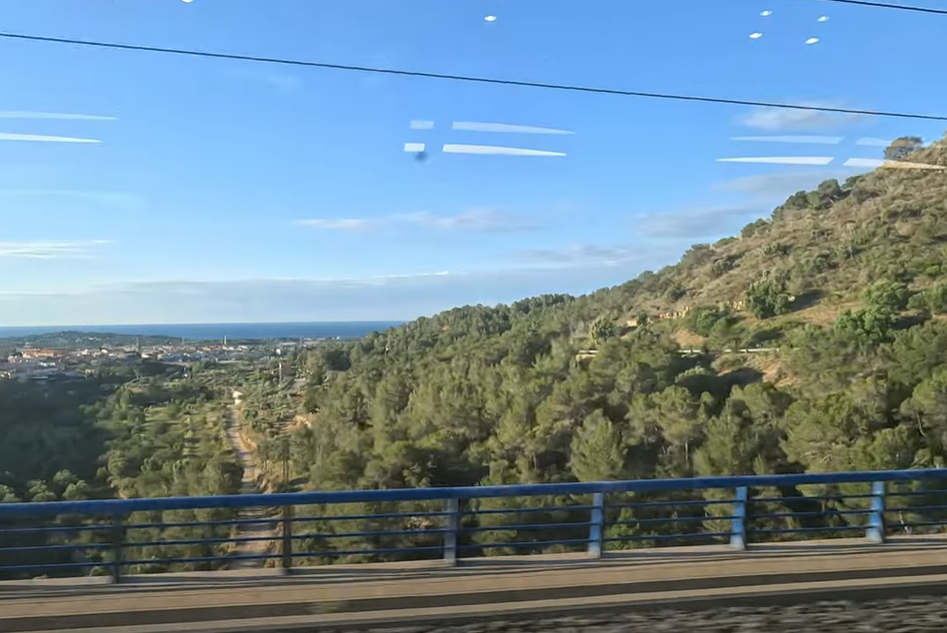
Is it perfect? Not quite. The booking system can be frustrating, Joaquín Sorolla station in Valencia feels like an architectural afterthought, and services can fill up during peak periods and holidays. But these minor inconveniences fade into insignificance when compared to the pleasure of traveling between two magnificent Mediterranean cities at high speed while enjoying decent coffee, abundant legroom, and views that would make suitable desktop wallpapers.
So the next time you’re planning to travel between Barcelona’s Gaudí-festooned splendor and Valencia’s orange-scented elegance, bypass the budget airline websites, ignore your rental car app, and treat yourself to a rail journey that reminds you that sometimes getting there is half the fun. Just remember to book early, secure a window seat on the right side of the train for optimal sea views, and perhaps pack a small bottle of cava to toast your good fortune as the Mediterranean slides by. After all, some travel experiences deserve a proper celebration, and this is certainly one of them.